Blog
Commercial Roof Maintenance Checklist for Property Managers: The Complete 12-Point Inspection Guide
June 8, 2026
Commercial Roof Maintenance Checklist for Property Managers: The Complete 12-Point Inspection Guide
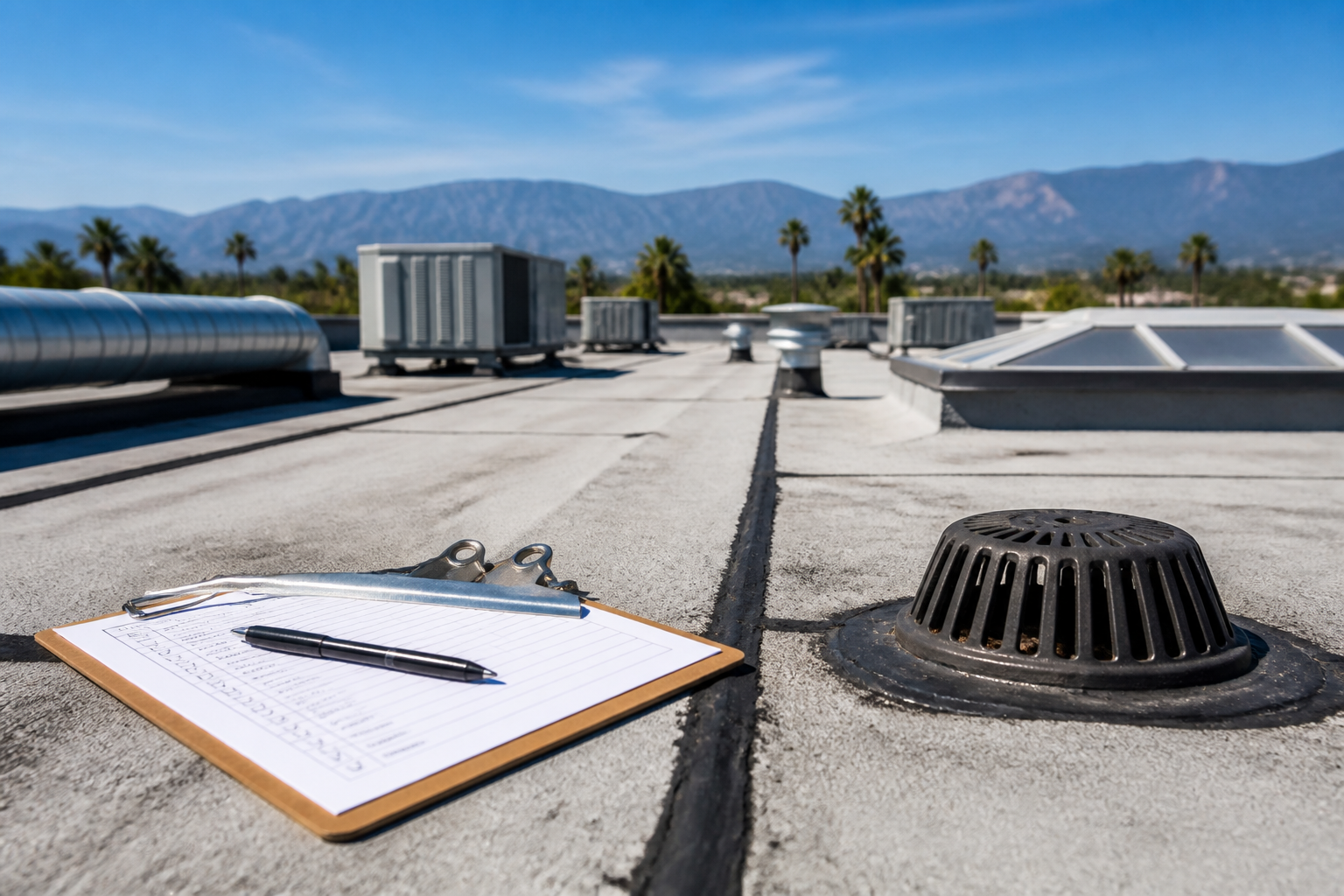
Property managers in Southern California face a unique challenge: keeping commercial roofs in peak condition while managing budgets, tenant concerns, and regulatory compliance. A single roof failure can result in thousands of dollars in emergency repairs, disrupted business operations, and potential liability issues. The solution? A systematic Commercial Roof Maintenance Checklist for Property Managers: The Complete 12-Point Inspection Guide that transforms reactive roof management into proactive protection.
Whether you’re overseeing office complexes in Alhambra, warehouse facilities across the Inland Empire, or retail centers throughout Los Angeles County, this comprehensive guide provides the framework for maintaining commercial roofs that protect your investment and your tenants.
Why Property Managers Need a Structured Roof Maintenance Approach
Commercial roofing represents one of the largest capital investments in any property portfolio. Yet many property managers approach roof maintenance reactively - waiting for leaks, ponding water, or tenant complaints before taking action. This approach is not only costly but potentially catastrophic for business continuity.
A structured maintenance program delivers measurable benefits:
Cost Control: Preventive maintenance costs approximately 10% of emergency repair expenses. A small membrane repair caught early might cost $200, while the same issue left unaddressed could lead to a $15,000 roof replacement project.
Tenant Retention: Nothing disrupts business operations like a leaking roof during peak hours. Tenants in well-maintained buildings report higher satisfaction rates and longer lease terms.
Regulatory Compliance: California’s Title-24 energy requirements and local building codes mandate specific roof performance standards. Our 2026 Title-24 commercial roofing requirements California guide details these evolving compliance obligations.
Insurance Protection: Many commercial insurance policies require documented maintenance records. A comprehensive inspection checklist provides the documentation needed to support claims and maintain coverage.
Property managers serving the diverse commercial markets from Alhambra to Orange County must adapt their maintenance strategies to local climate conditions, building types, and tenant requirements. The 12-point inspection system addresses these variables while providing consistency across your entire portfolio.
Warning Signs of Past Bad Repairs
Before diving into your comprehensive 12-point inspection, property managers should recognize the telltale signs of previous substandard repair work. During your roof walks, keep an eye out for these red flags that indicate a contractor used bucket-applied Henry’s or similar products without proper reinforcement:
Shiny Black Asphalt Blobs: These glossy, tar-like patches scattered across the roof surface are the most obvious indicator of amateur repair work. Quality commercial roof repairs use reinforced membrane systems, not bucket-applied asphalt compounds that crack and fail within months.
Alligator-Cracked Patches: When those shiny black repairs age, they develop a distinctive alligator-skin cracking pattern. This occurs because bucket-applied sealants lack the flexibility and UV resistance needed for commercial roof applications.
Raised Dams of Stacked Mastic: Look for areas where multiple layers of mastic or sealant have been applied over time, creating raised barriers that disrupt proper water flow. These “dam” areas often trap water and debris, creating new leak points.
Standing Water Rings: Circular stains or discoloration around previous repair areas indicate that the repair has failed and water is pooling. This is particularly problematic because it shows the repair not only failed to fix the original issue but created new drainage problems.
Each of these warning signs indicates that your roof has been compromised by inadequate repair methods. When you identify these issues during your inspection, prioritize them for proper repair using industry-standard materials and techniques. A professional commercial roof inspection can help you assess the extent of previous poor workmanship and develop a comprehensive repair strategy.
The 12-Point Commercial Roof Inspection System
1. Membrane Surface Condition Assessment
Begin every inspection by walking the entire roof surface, documenting the condition of the primary waterproof membrane. Look for:
- Cracking or splitting in single-ply membranes (TPO, PVC, EPDM)
- Blistering or bubbling indicating trapped moisture or poor installation
- Punctures or tears from foot traffic, equipment installation, or debris impact
- Seam separation where membrane sections join together
- Surface erosion on modified bitumen or built-up roof systems
Document findings with photos and GPS coordinates for precise tracking. Note that different membrane types require specific evaluation criteria - TPO roofs common in Southern California warehouses show different stress patterns than PVC membranes typically found on office buildings.
2. Drainage System Evaluation
Proper drainage is critical in California’s climate, where sudden winter storms can overwhelm inadequate systems. Inspect all drainage components:
- Roof drains and scuppers: Clear of debris, properly secured, and functioning
- Gutters and downspouts: Free-flowing with no standing water or overflow marks
- Ponding water areas: Any water standing 48 hours after rainfall indicates drainage problems
- Slope verification: Confirm proper drainage flow toward designated outlets
Pay special attention to areas where HVAC equipment or other roof penetrations may have altered original drainage patterns. Properties in the San Gabriel Valley, including Alhambra, often experience intense but brief storms that can reveal drainage inadequacies.
3. Flashing and Penetration Inspection
Roof penetrations represent the highest-risk areas for water infiltration. Systematically examine:
- HVAC unit flashing: Secure attachment, proper sealant application, no gaps or cracks
- Pipe penetrations: Properly sealed with appropriate boot materials
- Electrical conduit entries: Weatherproof connections and adequate clearance
- Skylight flashing: Critical for commercial buildings with daylighting features
For properties requiring commercial skylight removal and installation, document any signs of deterioration that might necessitate future replacement projects.
4. Edge Detail and Parapet Examination
Building perimeter details require careful attention as they’re exposed to the most severe weather conditions:
- Parapet walls: Check for cracks, loose mortar, or water staining
- Coping stones: Verify secure attachment and proper drainage
- Edge flashing: Confirm proper installation and weather-tight seals
- Fascia boards: Inspect for rot, damage, or separation
5. Structural Component Review
While property managers aren’t structural engineers, basic structural awareness prevents small issues from becoming major problems:
- Deck deflection: Look for sagging areas that might indicate structural stress
- Fastener backing out: Check for raised fastener heads or loose attachment points
- Crack patterns: Document any systematic cracking that might indicate structural movement
- Load-bearing changes: Note any new equipment installations that might affect roof loading
6. Insulation Performance Check
Energy efficiency directly impacts operating costs and tenant comfort. Evaluate:
- Thermal bridging: Areas where insulation may be compressed or missing
- Moisture intrusion: Signs of wet insulation that compromises R-value
- Settlement patterns: Uneven insulation that creates thermal weak points
- Vapor barrier integrity: Essential for preventing condensation problems
California’s commercial cool roof systems requirements make insulation performance particularly important for maintaining Title-24 compliance and controlling energy costs.
7. Safety System Documentation
Commercial roofs must provide safe access for maintenance and emergency personnel:
- Fall protection anchors: Verify proper installation and load testing documentation
- Access ladders and walkways: Check for secure attachment and safe condition
- Warning signs and barriers: Ensure proper marking of roof hazards
- Emergency egress routes: Confirm clear and safe pathways
8. Equipment and Installation Review
Commercial roofs typically support significant equipment loads requiring ongoing attention:
- HVAC equipment supports: Check for proper vibration isolation and secure mounting
- Electrical equipment: Verify weatherproof installation and adequate clearances
- Solar panel installations: For properties with solar panel roofing installation, confirm secure mounting and proper flashing integration
- Communication equipment: Document antenna and dish installations
9. Ventilation System Assessment
Proper ventilation prevents moisture problems and extends roof life:
- Exhaust fans: Verify proper operation and weather-tight installation
- Passive vents: Check for blockages or damage
- Air intake systems: Ensure clear operation and proper screening
- Pressure relief vents: Confirm proper function for buildings with controlled atmospheres
10. Environmental Impact Evaluation
Southern California’s unique climate creates specific maintenance challenges:
- UV degradation: More severe in high-altitude areas and desert climates
- Thermal cycling stress: Extreme temperature variations between day and night
- Seismic movement signs: California-specific concern requiring documentation
- Wind uplift evidence: Particularly important for buildings in high-wind corridors
11. Documentation and Record Review
Effective maintenance requires comprehensive record-keeping:
- Previous inspection reports: Compare current conditions to historical data
- Warranty documentation: Track coverage for membrane, flashing, and equipment
- Maintenance performed: Document all repairs, replacements, and preventive work
- Weather event impacts: Correlate roof condition with recent storm or seismic activity
12. Priority Assessment and Scheduling
Conclude each inspection with action planning:
- Immediate repairs: Safety hazards requiring prompt attention
- Scheduled maintenance: Items requiring attention within 30-90 days
- Budget planning: Major repairs or replacements needed within the next fiscal year
- Vendor coordination: Scheduling for specialized repairs or improvements
For properties requiring professional intervention, established preventive commercial roof maintenance programs provide the expertise and scheduling consistency that busy property managers need.
HP Roofing Pro’s 3-Course Repair Philosophy
Professional Repair Method That Lasts
At HP Roofing Pro, we follow a proven 6-step repair process: dry → clean → emulsion → fabric → topcoat → cure. Here’s why each step matters:
Dry: The substrate must be completely moisture-free. Trapped moisture under repairs leads to blistering and premature failure.
Clean: All debris, loose material, and contaminants must be removed to ensure proper adhesion of repair materials.
Emulsion: A high-quality primer/base coat creates the foundation for long-lasting repairs and ensures compatibility between old and new materials.
Fabric: Reinforcement fabric adds tensile strength and bridges gaps, preventing stress concentration that leads to crack propagation.
Topcoat: The final protective layer provides UV resistance, waterproofing, and weather protection.
Cure: Proper curing time ensures the repair reaches full strength and durability before exposure to weather or foot traffic.
This systematic approach costs more initially than bucket-applied patches, but delivers repairs that last decades instead of months.
Implementing Your Maintenance Program
Seasonal Scheduling Strategy
Southern California’s climate allows year-round roof maintenance, but strategic timing optimizes results:
Fall Preparation (September-November): Comprehensive inspections before winter rains. Focus on drainage system cleaning and waterproofing repairs. Check for ponding water areas and clear all drains of debris accumulated during dry summer months.
Winter Monitoring (December-February): Post-storm inspections to identify weather-related damage. Address any emergency repairs promptly. Document any new ponding areas created by seasonal debris or settling.
Spring Assessment (March-May): Major maintenance projects during mild weather. Ideal for membrane repairs and equipment installations. Evaluate drainage performance after winter rains and address any puddle problems identified.
Summer Planning (June-August): Budget planning and preparation for next cycle. Schedule major projects to avoid disrupting tenant operations during peak business periods. Check for heat-related expansion issues and drainage adequacy for summer storms.
Technology Integration
Modern property management benefits from digital tools that streamline the inspection process:
- Mobile inspection apps that standardize data collection and photo documentation
- Drone technology for safe inspection of large or high-elevation roofs
- Thermal imaging to identify insulation problems and moisture intrusion
- Cloud-based record keeping for easy access to historical maintenance data
Vendor Relationship Management
Successful maintenance programs require reliable professional partnerships. When selecting roofing contractors, prioritize:
- California State License Board (CSLB) verification and current licensing
- Manufacturer certifications for the specific roof systems in your portfolio
- Insurance coverage appropriate for commercial work scope
- Local experience with Southern California climate and building requirements
Property managers in Alhambra and surrounding communities benefit from working with contractors who understand local building codes, permit requirements, and climate-specific challenges. Our guide on how to choose a licensed commercial roofing contractor in California provides detailed vetting criteria for professional partnerships.
Cost-Benefit Analysis of Proactive Maintenance
The financial impact of systematic roof maintenance extends far beyond simple repair cost comparisons. Consider these real-world scenarios common to Southern California commercial properties:
Scenario 1 - Warehouse Complex: A 50,000 square foot warehouse with a 15-year-old TPO roof. Annual maintenance cost: $2,500. Without maintenance, the roof requires replacement at year 18 instead of year 25, representing a $75,000 accelerated capital expense.
Scenario 2 - Office Building: A three-story office building in the San Gabriel Valley with a modified bitumen roof. Regular maintenance identifies and repairs small membrane areas before they compromise the underlying structure. Total maintenance cost over 5 years: $8,000. Alternative scenario with structural repairs: $35,000+.
Scenario 3 - Retail Center: A 100,000 square foot retail center where systematic maintenance prevents tenant disruption during peak shopping seasons. The cost of lost rent and tenant relations from emergency repairs: incalculable.
Property managers who implement comprehensive maintenance programs report average roof life extensions of 30-40%, while reducing emergency repair frequency by over 80%.
Seasonal Challenges in Southern California
Heat Management
Summer temperatures exceeding 100°F create unique challenges for commercial roofs in inland areas like San Bernardino and Riverside counties. Thermal expansion and contraction stress membrane seams and flashing connections. Properties with dark-colored roofs benefit from white acrylic cool roof coatings for warehouses that reduce surface temperatures and energy costs.
Winter Storm Preparation
While Southern California winters are mild compared to other regions, intense storm systems can deliver significant rainfall in short periods. Properties in foothill areas face additional challenges from wind-driven rain and potential debris impact. Drainage system capacity becomes critical during these events.
Fire Season Considerations
Wildfire season requires special attention to roof-mounted equipment and vegetation management. Ember protection and defensible space requirements affect commercial properties throughout the region. Document and maintain clear areas around HVAC equipment and building perimeters.
Frequently Asked Questions
Q: How often should property managers conduct roof inspections?
Property managers should perform basic visual inspections quarterly, with comprehensive professional inspections annually. High-risk areas like drainage systems and roof penetrations should be checked monthly during rainy season. After severe weather events, immediate inspections are essential to identify storm damage before it becomes a major problem.
Q: What are the most common roof problems found during property manager inspections?
The most frequent issues include clogged drains and gutters, damaged flashing around HVAC equipment, membrane punctures from foot traffic, and ponding water areas. In Southern California, UV damage to exposed sealants and thermal expansion stress on seams are particularly common due to intense sun exposure and temperature fluctuations.
Q: When should a property manager call for professional roof repairs versus handling maintenance in-house?
Call professionals for any structural issues, major membrane repairs, flashing work around penetrations, or safety-related problems. In-house maintenance can typically handle debris removal, basic drain cleaning, and surface-level inspections. Never attempt repairs involving electrical equipment, fall hazards, or warranty-covered areas without proper licensing and insurance.
Q: How can property managers prevent ponding water issues on flat roofs?
Establish a regular drain cleaning schedule, ensure proper roof slope during installation, and address any settling or structural issues promptly. During seasonal inspections, mark and photograph any areas where water stands more than 48 hours after rainfall. Consider installing additional drains or tapered insulation systems in chronic ponding areas.
Q: What documentation should property managers maintain for roof maintenance?
Keep detailed records of all inspections, repairs, warranty information, and weather events. Photograph problem areas with GPS coordinates and dates. Maintain vendor contracts, licensing verification, and insurance certificates for all contractors. This documentation is essential for warranty claims, insurance coverage, and legal compliance.
Q: How do Southern California’s climate conditions affect commercial roof maintenance schedules?
The region’s intense UV exposure accelerates membrane degradation, requiring more frequent sealant and coating maintenance. Minimal rainfall means drainage systems may accumulate debris unnoticed until storm season. Seismic activity requires regular checking of flashing and penetration seals. Wildfire season adds the need for ember-resistant maintenance and defensible space compliance.
Q: What should property managers look for when hiring commercial roofing contractors?
Verify current CSLB licensing (HP Roofing Pro #1043546), appropriate insurance coverage, and manufacturer certifications for your specific roof systems. Check references from similar commercial properties and confirm experience with local building codes and permit requirements. Ensure contractors follow systematic repair procedures rather than quick-fix approaches that lead to recurring problems.
Conclusion
A systematic approach to commercial roof maintenance transforms one of property management’s biggest challenges into a manageable, cost-effective process. The Commercial Roof Maintenance Checklist for Property Managers: The Complete 12-Point Inspection Guide provides the framework for protecting your investment while ensuring tenant satisfaction and regulatory compliance.
Property managers in Alhambra, Los Angeles County, and throughout Southern California face unique climate challenges that make proactive maintenance essential. From the extreme heat of inland valleys to the marine layer moisture of coastal areas, local conditions demand specialized knowledge and systematic attention.
Remember that professional expertise complements your inspection efforts. While property managers can identify many issues through systematic inspection, complex repairs and major maintenance projects require qualified commercial roofing contractors with appropriate licensing, insurance, and manufacturer certifications.
Ready to implement a comprehensive maintenance program for your commercial properties? Contact HP Roofing Pro today at (626) 244-0383 for expert assistance with roof inspections, maintenance planning, and professional repairs. Our team understands the unique challenges facing Southern California property managers and provides the reliable, cost-effective solutions that protect your investment and your tenants.