Blog
Commercial Roof Safety Regulations: OSHA Compliance Guide for LA Property Owners
May 26, 2026
Commercial Roof Safety Regulations: OSHA Compliance Guide for LA Property Owners
When David Thompson, facilities director at a manufacturing complex in Alhambra, received three roofing bids for his 50,000-square-foot warehouse, the price differences were staggering. The lowest bid was 40% cheaper than the others, but it raised red flags about safety protocols and insurance coverage. As a facilities manager responsible for contractor oversight, David knew that cutting corners on commercial roof safety regulations could expose his company to devastating liability, OSHA violations, and potential workplace accidents that could shut down operations for weeks.
If you’re a property owner, facilities manager, or business owner in the Los Angeles area, understanding OSHA roofing requirements isn’t just about regulatory compliance, it’s about protecting your business, your employees, and your bottom line. When commercial roofing work goes wrong due to inadequate safety measures, the consequences can include hefty fines, lawsuits, insurance claims, and operational disruptions that cost far more than investing in proper safety protocols from the start.
This comprehensive guide breaks down everything you need to know about commercial roof safety regulations, OSHA requirements for roofing contractors, and how to verify that your chosen contractor meets all necessary safety standards before work begins on your property.
Understanding OSHA’s Commercial Roofing Safety Standards
The Occupational Safety and Health Administration (OSHA) has established specific regulations for commercial roofing work under 29 CFR 1926, Subpart M - Fall Protection. These regulations aren’t suggestions, they’re legally mandated requirements that apply to all commercial roofing projects, regardless of building height or roof type.
Key OSHA requirements include:
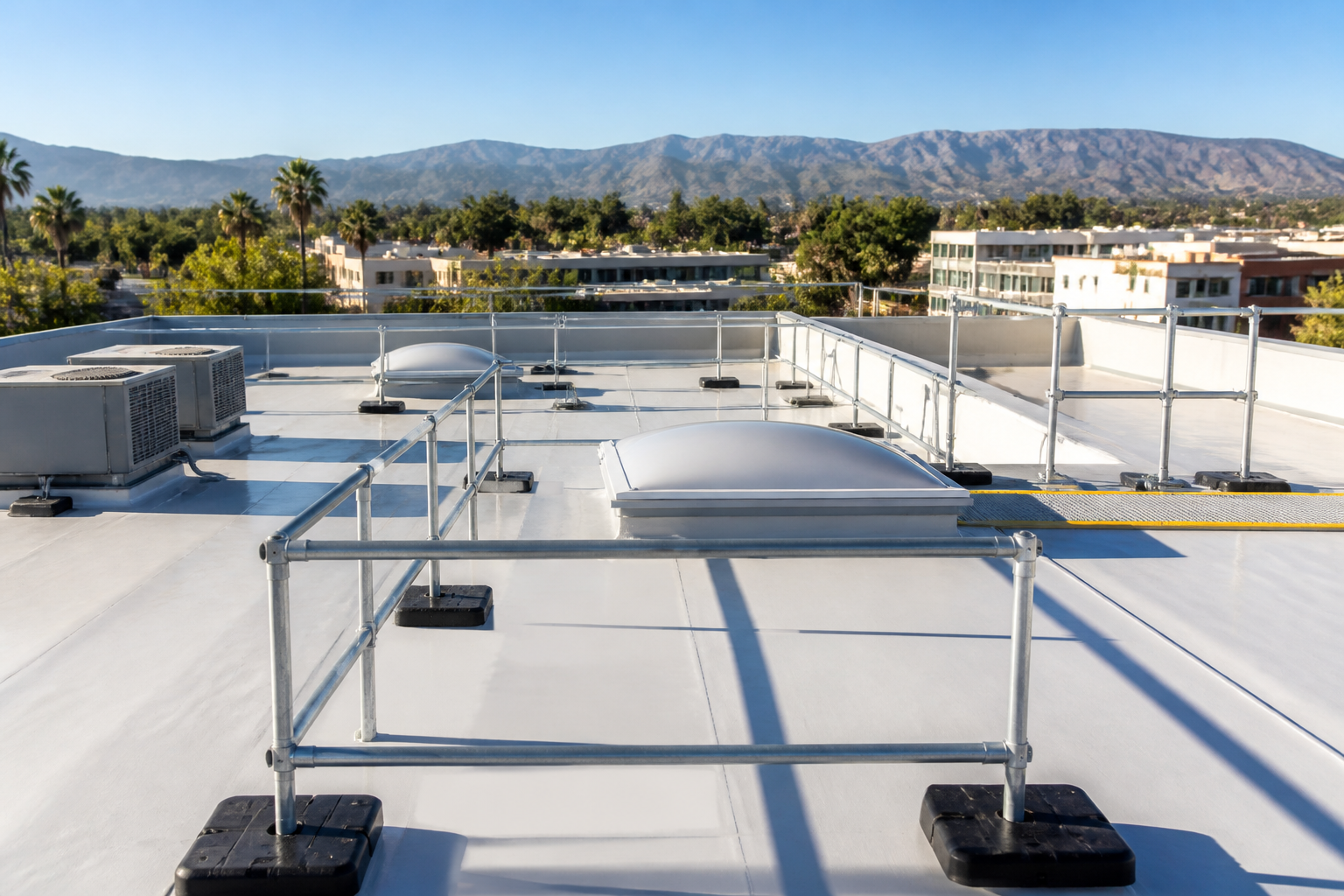
Fall Protection Systems: Any work performed at heights of 6 feet or more requires fall protection. For commercial roofing, this means contractors must implement one or more of the following: guardrail systems, safety net systems, or personal fall arrest systems (PFAS).
Training and Certification: All workers performing roofing tasks must receive comprehensive safety training specific to their assigned tasks. This includes proper use of fall protection equipment, hazard recognition, and emergency procedures.
Equipment Inspection and Maintenance: All safety equipment must be inspected before each use and maintained according to manufacturer specifications. Damaged or worn equipment must be immediately removed from service.
Hazard Communication: Contractors must identify and communicate all potential hazards to workers, including fall hazards, electrical hazards, and weather-related risks.
For property owners in Alhambra and throughout Los Angeles County, these regulations create both obligations and protections. While you’re not directly responsible for implementing safety measures, you do have liability exposure if accidents occur on your property due to inadequate contractor safety practices.
California-Specific OSHA Roofing Requirements
California operates under Cal/OSHA, which often implements stricter safety standards than federal OSHA requirements. These enhanced regulations particularly impact commercial roofing projects throughout the Los Angeles metropolitan area, including Alhambra.
California’s Enhanced Requirements:
Heat Illness Prevention: Given Southern California’s climate, contractors must implement comprehensive heat illness prevention programs during hot weather conditions. This includes providing adequate water, shade, and rest periods for workers.
Injury and Illness Prevention Program (IIPP): All contractors must maintain a written IIPP that identifies the person responsible for implementing the program, workplace hazard assessment procedures, employee training protocols, and incident investigation procedures.
Permit Requirements: Many commercial roofing projects require permits from local building departments. In Alhambra, contractors must obtain proper permits before beginning work and ensure all safety requirements are met before permit approval.
Seismic Considerations: California’s seismic activity requirements mean that roofing safety systems must account for potential earthquake activity during construction, requiring additional anchoring and stability measures.
Air Quality Compliance: When roofing work involves removal of existing materials or installation of new systems that could generate dust or fumes, contractors must comply with South Coast Air Quality Management District (SCAQMD) regulations.
Property owners should verify that their chosen contractor understands and complies with all California-specific requirements, as violations can result in work stoppages, fines, and increased liability exposure.
Property Owner Liability and Responsibilities
As a commercial property owner or facilities manager, you might assume that safety compliance is entirely the contractor’s responsibility. While contractors bear primary responsibility for worker safety, property owners face potential liability in several scenarios.
Direct Liability Situations:
Premises Liability: If your property contains known hazards that contribute to worker injuries, you could face premises liability claims. This includes structural defects, unmarked electrical equipment, or environmental hazards.
Retained Control Doctrine: If you maintain control over safety aspects of the work or directly supervise contractor activities, courts may find you liable for safety violations and resulting injuries.
Contractual Liability: Poorly written contracts can inadvertently shift liability from contractors to property owners. Contract language must clearly define safety responsibilities and liability allocation.
Protective Measures for Property Owners:
Contractor Verification: Require proof of current licenses, insurance coverage, and safety certifications before allowing work to begin. Verify that insurance coverage includes general liability, workers’ compensation, and professional liability.
Safety Requirements in Contracts: Include specific safety requirements in your contracts, such as OSHA compliance, regular safety meetings, and incident reporting procedures. Require contractors to provide safety plans before work begins.
Documentation Requirements: Maintain records of all safety-related communications, training certifications, and incident reports. This documentation protects you in case of accidents or regulatory investigations.
Regular Inspections: Conduct periodic safety inspections during roofing work, focusing on fall protection systems, equipment maintenance, and adherence to safety protocols. Document all observations.
Businesses in Alhambra should also consider consulting with local attorneys who understand California construction law to ensure contracts and safety procedures provide maximum protection.
Contractor Safety Verification and Documentation
Before any commercial roofing contractor begins work on your property, you need a systematic approach to verify their safety credentials and ongoing compliance. This verification process protects your business and ensures you’re working with qualified professionals.
Essential Verification Steps:
License and Insurance Verification: Confirm that contractors hold valid California contractor licenses (typically C-39 for roofing work) and verify coverage amounts and policy expiration dates directly with insurance carriers. Don’t rely solely on insurance certificates, call the insurance company to confirm active coverage.
Safety Training Records: Request documentation of worker safety training, including fall protection certification, hazard recognition training, and equipment operation certification. Training should be current within the past year and specific to the type of work being performed.
Equipment Inspection Records: Review equipment inspection logs and maintenance records for all safety equipment. Properly maintained equipment should have regular inspection documentation and immediate removal procedures for damaged items.
Safety Program Documentation: Examine the contractor’s written safety program, including their Injury and Illness Prevention Program (IIPP), emergency response procedures, and incident investigation protocols.
Reference Verification: Contact recent commercial clients to inquire about safety performance, incident history, and overall professionalism. Ask specific questions about safety meetings, equipment quality, and adherence to safety protocols.
Red Flags to Avoid:
- Contractors who cannot provide current safety training documentation
- Significantly lower bids that don’t account for proper safety equipment and procedures
- Reluctance to provide insurance verification or safety program documentation
- History of OSHA violations or safety incidents
- Workers without proper fall protection equipment during initial site visits
Facilities managers in the Los Angeles area should also verify that contractors understand local requirements, including city-specific permit requirements and building codes that may impact safety procedures.
Creating a Safety-Compliant Roofing Contract
Your roofing contract serves as the foundation for safety compliance and liability protection throughout your project. A well-crafted contract clearly defines safety responsibilities, sets compliance standards, and establishes procedures for addressing safety violations.
Essential Contract Elements:
Safety Standards Clause: Explicitly require compliance with all applicable OSHA regulations, California safety requirements, and local building codes. Include specific penalties for safety violations and procedures for addressing non-compliance.
Insurance and Liability Requirements: Specify minimum insurance coverage amounts, require certificates of insurance naming your business as additional insured, and establish clear liability allocation for different types of incidents.
Safety Plan Requirements: Require contractors to submit detailed safety plans before work begins, including fall protection procedures, equipment specifications, emergency response protocols, and worker training documentation.
Inspection and Monitoring Rights: Reserve your right to conduct safety inspections, attend safety meetings, and review safety documentation throughout the project. Include provisions for work stoppage if safety violations occur.
Documentation and Reporting: Require daily safety reports, incident documentation, and regular safety meeting minutes. Establish clear communication protocols for safety concerns or violations.
Performance Standards: Include specific performance metrics related to safety, such as zero tolerance for fall protection violations, required safety meeting frequency, and equipment maintenance standards.
Local Compliance: For projects in Alhambra and surrounding Los Angeles areas, include specific requirements for local permit compliance, air quality regulations, and any city-specific safety requirements.
Working with an experienced commercial roofing contractor who understands these requirements can help ensure your contract provides comprehensive protection while maintaining reasonable project timelines and costs.
Monitoring and Maintaining Safety Compliance
Safety compliance doesn’t end when you sign a contract with a qualified contractor. Ongoing monitoring and documentation throughout your roofing project helps ensure continued compliance and provides evidence of due diligence in case of incidents or regulatory investigations.
Ongoing Monitoring Strategies:
Regular Safety Inspections: Conduct weekly safety inspections focusing on fall protection systems, equipment condition, and adherence to established safety protocols. Document all observations with photographs and written reports.
Safety Meeting Participation: Attend contractor safety meetings to understand current safety concerns, review any incidents or near-misses, and ensure ongoing compliance with safety requirements.
Worker Verification: Periodically verify that all workers on your project have current safety training and are following established protocols. New workers should not begin work without proper training documentation.
Equipment Monitoring: Observe safety equipment setup and use during site visits. Look for properly installed guardrails, functioning safety harnesses, and appropriate fall protection systems for the specific work being performed.
Documentation Management: Maintain organized files of all safety-related documentation, including inspection reports, training records, incident reports, and safety meeting minutes. This documentation proves your commitment to safety compliance.
Response Protocols: Establish clear procedures for addressing safety violations, including work stoppage authority, correction timelines, and escalation procedures for serious violations.
Property owners should also maintain relationships with local safety consultants who can provide expert evaluation of contractor safety performance and help identify potential compliance issues before they become serious problems.
Ensuring Long-Term Compliance Success
Commercial roof safety regulations protect everyone involved in roofing projects, from workers performing the actual work to property owners who could face liability for safety violations. By understanding OSHA requirements, verifying contractor qualifications, and maintaining active oversight throughout your project, you create a framework for successful, safe roofing projects that protect your business and comply with all applicable regulations.
Remember that investing in proper safety compliance pays dividends beyond regulatory compliance. Safe contractors typically provide higher-quality work, experience fewer delays due to accidents or violations, and maintain better long-term relationships with their clients. When you prioritize safety in your contractor selection process, you’re investing in project success and business protection.
For commercial property owners in Alhambra and throughout the Los Angeles area, working with experienced, safety-focused roofing contractors isn’t just about meeting regulations, it’s about protecting your business, your employees, and your investment in professional roofing services.
Contact HP Roofing Pro today for a comprehensive safety assessment of your commercial roofing needs. Our team of certified professionals understands all applicable OSHA requirements, California safety regulations, and local compliance requirements. We provide detailed safety documentation, maintain comprehensive insurance coverage, and prioritize safety compliance in every commercial roofing project. Call us to discuss your roofing project and learn how our commitment to safety excellence protects your business while delivering exceptional roofing results.
Looking for a trusted commercial roofing contractor in LA? Contact HP Roofing Pro - we serve commercial properties across Los Angeles from our Alhambra headquarters.