Blog
Cool Roof Requirements in Los Angeles: What Commercial Property Owners Need to Know About Title 24 and Energy Costs
June 19, 2026
Cool Roof Requirements in Los Angeles: What Commercial Property Owners Need to Know About Title 24 and Energy Costs
If you manage commercial properties across Los Angeles County, there’s a good chance your next re-roofing project will trigger compliance requirements you haven’t fully accounted for yet. California’s Title 24 energy code mandates cool roof standards for most commercial re-roofing work, and for many property managers, the first time they hear about it is when a contractor mentions it mid-project. Understanding what a cool roof los angeles requirement actually means, when it applies, and how to meet it without blowing your capital budget is essential knowledge for anyone responsible for a multi-building portfolio in the LA area.
The good news: compliance doesn’t have to mean a full tear-off and replacement. And when done right, it can actually reduce your long-term energy spend in ways that make the project pay for itself.
What Is a Cool Roof, and Why Does California Require One?
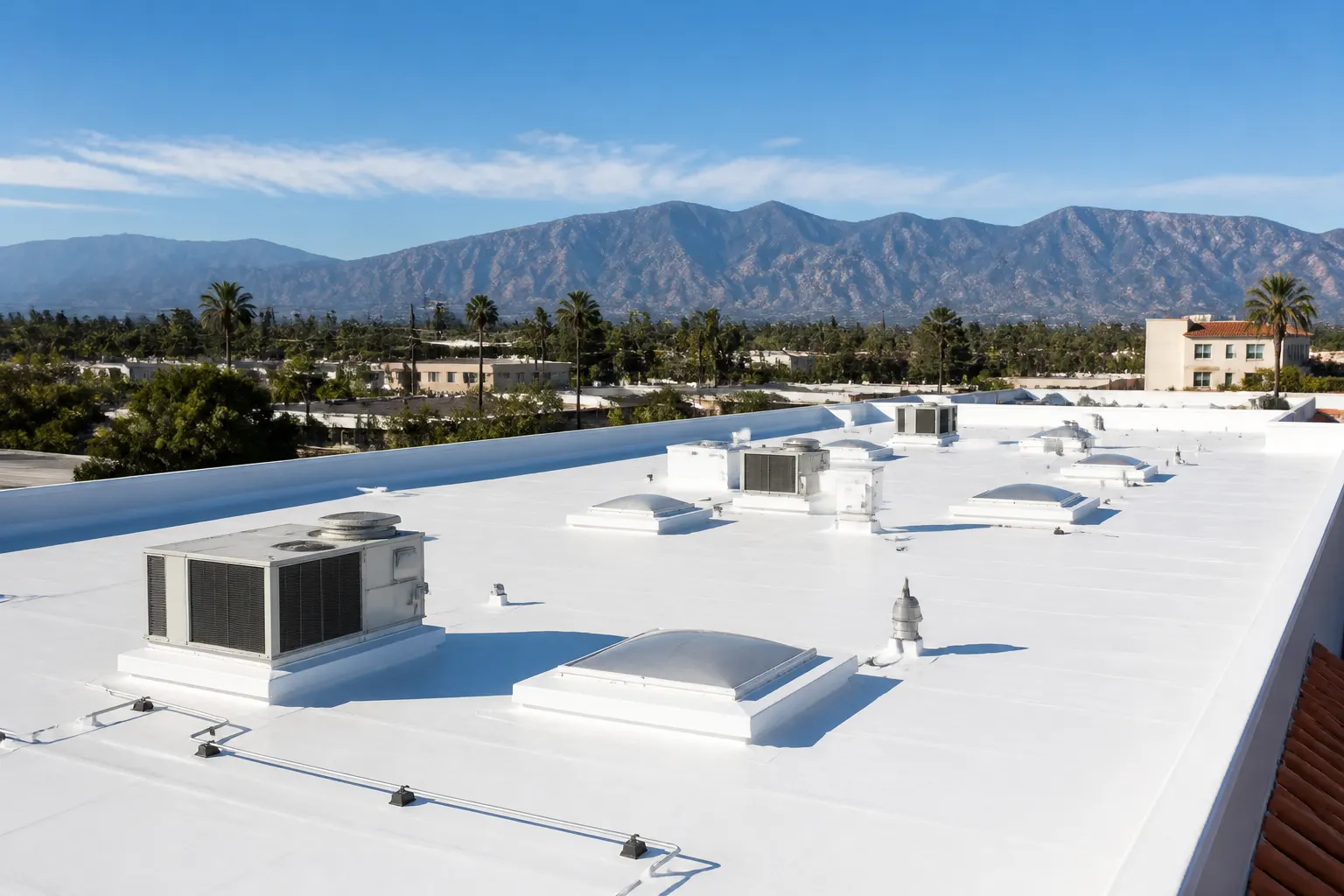
A cool roof is any roofing system designed to reflect more sunlight and absorb less heat than a standard roof. On a hot Southern California afternoon, a conventional dark membrane can reach surface temperatures of 150°F or higher. A compliant cool roof, typically a white or light-colored, highly reflective surface, might stay 50 to 80 degrees cooler under the same sun.
That temperature difference isn’t just a roofing stat. It directly affects the ambient temperature inside your building, your HVAC runtime, and your monthly utility bill. At scale across a portfolio of buildings in LA County, those savings compound quickly.
California’s Title 24 Building Energy Efficiency Standards require that when commercial roofing meets specific replacement thresholds, the new or restored surface must meet minimum Solar Reflectance Index (SRI) values. For low-slope commercial roofs, the flat and near-flat systems that cover most warehouses, retail strips, office buildings, and industrial properties, the standard typically requires an initial solar reflectance of at least 0.63 and a thermal emittance of at least 0.75.
For a deeper look at how California’s energy code is evolving, our overview of 2026 Title-24 commercial roofing requirements California covers the regulatory trajectory and what property owners should be planning for now.
When Does Title 24 Cool Roof Compliance Apply to Your Property?
This is the question most commercial property managers ask first, and it’s the right one. Not every roofing project automatically triggers Title 24 cool roof compliance, but the thresholds are lower than most people expect.
In California, compliance is generally required when:
- You’re re-roofing more than 50% of the roof area in a 12-month period
- The project involves removal of existing roofing materials down to the deck
- New construction of any commercial building
Repairs covering less than half the roof typically fall outside the trigger threshold, but that calculation resets annually, so property managers overseeing phased maintenance programs need to track cumulative work carefully. Splitting a large project across two fiscal years to stay under the 50% threshold is a documented strategy, but it requires careful scope management and contractor coordination.
One complication specific to commercial buildings in Los Angeles: LA’s local amendments to Title 24 and the requirements enforced by LADBS (Los Angeles Department of Building and Safety) can layer additional requirements on top of state minimums. Urban heat island mitigation has become a higher municipal priority in recent years, meaning some commercial zones face stricter expectations. Always verify with a licensed roofing contractor who works regularly in your specific jurisdiction.
The Restoration Option: Meeting Cool Roof Standards Without Full Replacement
Here’s where many property managers discover they’ve been leaving money on the table. The assumption that Title 24 cool roof compliance requires tearing off the existing roof and installing new membrane is simply wrong, and that assumption can cost you hundreds of thousands of dollars unnecessarily.
California’s energy code allows for roof coating systems that demonstrate compliant solar reflectance and thermal emittance values. A properly applied elastomeric coating over a structurally sound existing membrane can satisfy the standard, eliminate the cost and landfill waste of a full tear-off, and extend the functional life of your roof by 10 to 20 years.
Our commercial roof coating restoration is specifically engineered to meet Title 24 requirements while functioning as a seamless, waterproof membrane restoration. Applied over TPO, modified bitumen, built-up roofing, and other common commercial substrates, the seamless coating system uses a high-solids acrylic elastomeric formula that achieves both the reflectance and emittance values required under California’s energy code. It eliminates seams, the number one source of commercial roof leaks, and provides a continuous, UV-resistant surface that holds up to Southern California’s heat cycles year after year.
For property managers overseeing multiple buildings from a base like Alhambra, CA, the math is straightforward: a coating restoration typically costs 40 to 60 percent less than a full replacement, qualifies for the same Title 24 compliance credit, and produces measurable energy savings from day one. For more on how acrylic-based systems work in practice, our comprehensive guide to acrylic cool roof coatings for commercial buildings walks through material science, application criteria, and performance expectations in detail.
Energy Cost Impact: What the Numbers Look Like for LA County Properties
Energy efficiency is often framed as an environmental benefit first, and it is, but for a facilities director managing a maintenance and operating budget, the financial case matters more. So let’s talk about what a compliant cool roof actually does to your energy costs.
Studies from Lawrence Berkeley National Laboratory and the California Energy Commission consistently show that reflective roofing reduces cooling energy consumption by 10 to 40 percent depending on building type, existing insulation, and HVAC configuration. For a 50,000-square-foot warehouse or distribution facility in the San Gabriel Valley running commercial HVAC through an LA County summer, that range translates to real dollar figures.
More precisely: a building spending $4,000 per month on cooling from June through September could realistically save $400 to $1,600 monthly after a cool roof installation. Annualized across a multi-building portfolio, that’s a recovery figure worth including in your capital improvement justification.
Beyond direct energy savings, a cooler roof surface means less thermal stress cycling on the membrane itself. Every time a roof heats up rapidly and cools down, the material expands and contracts. Over years, that movement fatigues seams, flashings, and penetration seals. A reflective surface that stays cooler throughout the day undergoes less of that cycling, which means fewer leak events, lower commercial roof repair frequency, and longer intervals between major projects.
What to Ask Your Contractor Before Work Begins
Not every roofing contractor operating in the LA area is equally familiar with Title 24 compliance documentation. For commercial property managers, this gap creates real risk: a project completed without proper compliance verification can result in failed inspections, required rework, or liability during a future property sale or insurance claim.
Before any re-roofing project begins on your Alhambra, CA properties or anywhere else in your LA County portfolio, ask your contractor these questions directly:
1. Will this project trigger Title 24 cool roof compliance? Your contractor should be able to calculate your project scope against the 50% threshold and give you a clear answer, not a vague “probably not.”
2. What cool roof products are you proposing, and what are their rated SRI values? Compliant products must appear on the California Energy Commission’s Rated Products Directory. Ask for the specific product listing, not just a verbal assurance.
3. Will you provide compliance documentation for permit and record purposes? This includes manufacturer data sheets, CRRC (Cool Roof Rating Council) ratings, and any applicable LADBS documentation.
4. Is the existing membrane in condition to support a coating restoration? A responsible contractor will conduct a core cut and moisture survey before recommending restoration over replacement. If they skip this step, that’s a red flag.
For more guidance on evaluating contractors before you sign anything, our article on how to choose a licensed commercial roofing contractor in California covers CSLB verification, insurance requirements, and the questions that separate professional operators from cut-rate outfits.
Ongoing Compliance and Roof Longevity: The Role of Maintenance
A Title 24-compliant cool roof system doesn’t maintain its performance values automatically. Reflectance degrades over time as dust, biological growth, and UV exposure affect the surface. California’s energy code accounts for this with “aged” reflectance values in its testing standards, but physical maintenance plays a role too.
For commercial property managers in Alhambra and across LA County, a structured roof maintenance program does three things: it keeps your reflective surface performing close to its rated values, it catches developing problems before they become emergency leaks, and it creates the inspection record that protects you during insurance claims and property transactions.
Preventive commercial roof maintenance on a cool roof coating system typically includes annual surface cleaning, reflectance spot-checks, recoating of worn areas, and inspection of flashings and penetrations. The cost is a fraction of what deferred maintenance typically produces in repair invoices and emergency response fees. If you’re building or updating a multi-property maintenance plan, our 18 tips for creating a commercial roof maintenance plan is a practical starting point for facilities directors managing diverse building types and ages.
Work With a Contractor Who Knows LA County’s Requirements
Title 24 cool roof compliance is not optional, and the penalties for non-compliance, failed inspections, required demolition and rework, liability exposure, are real costs that dwarf any short-term savings from cutting corners. But compliance also doesn’t have to mean maximum spend. With the right contractor and the right system, you can meet the standard, reduce energy costs, extend your roof’s service life, and keep the project within a budget that makes sense for your portfolio.
HP Roofing Pro is based in Alhambra, CA and serves commercial property owners throughout Los Angeles County and the broader Southern California region. Our team works with property managers and facilities directors to assess compliance requirements, evaluate existing roof conditions, and recommend the most cost-effective path to a durable, code-compliant result, whether that’s a full restoration through our commercial cool roof systems or a targeted repair approach.
Contact HP Roofing Pro today to schedule a no-obligation roof assessment for your LA County commercial properties. We’ll evaluate your current membranes, confirm your Title 24 exposure, and provide a clear proposal so you can plan your budget and timeline with confidence.
HP Roofing Pro serves commercial property owners throughout Alhambra, Los Angeles County, and surrounding Southern California markets. Licensed, insured, and fully compliant with California CSLB requirements.