Blog
Flat Roof vs Low-Slope Commercial Roofing: System Options for LA Business Owners
June 15, 2026
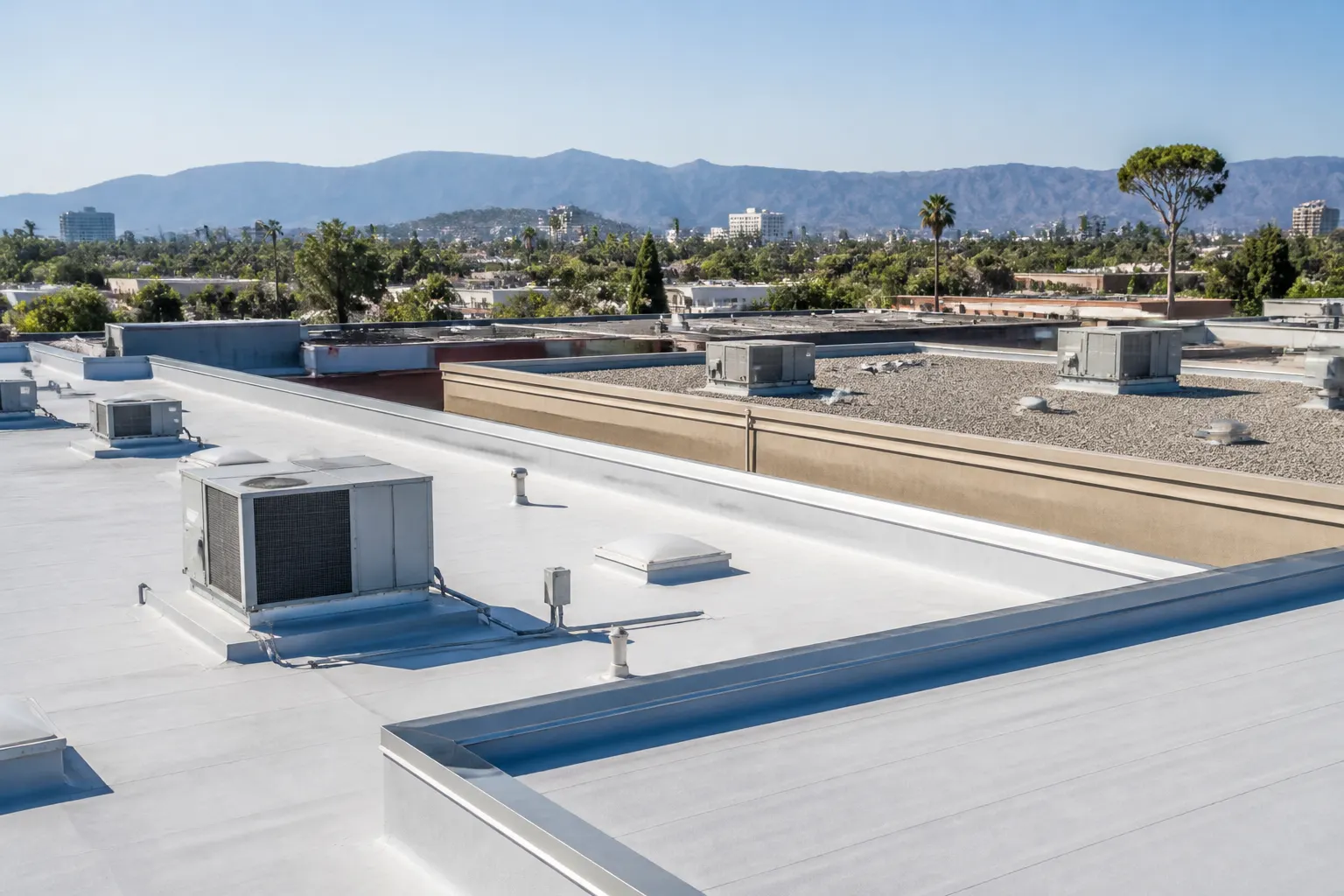
Flat Roof vs Low-Slope Commercial Roofing: System Options for LA Business Owners
If you’ve inherited a commercial building with a flat or low-slope roof, you’re probably wondering what roofing system will serve your business best. Many property owners in the Los Angeles area face this challenge, especially when dealing with older buildings that need roof replacement or restoration. Understanding your flat roof systems options is crucial for making an informed decision that protects your investment while managing costs effectively.
The choice between different commercial roofing systems isn’t just about upfront costs—it’s about long-term performance in Southern California’s unique climate. From the intense UV exposure to occasional heavy rains, your roof needs to handle it all while keeping your business operations running smoothly. Whether you’re managing a warehouse in the San Gabriel Valley or an office building in downtown LA, the right roofing system can save you thousands in energy costs and prevent costly emergency repairs.
This comprehensive guide will walk you through the most popular flat and low-slope roofing options available to Los Angeles business owners, helping you understand the pros and cons of each system so you can make the best choice for your property.
Understanding Flat Roof vs Low-Slope Roofing Systems
Before diving into specific roofing materials, it’s important to understand the distinction between flat and low-slope roofs. True flat roofs are rare in commercial construction—most “flat” roofs actually have a slight slope (typically ¼ inch per foot) to facilitate drainage. Low-slope roofs have slopes ranging from ¼ inch to 3 inches per foot.
Both flat and low-slope roofs require similar roofing systems because they can’t shed water as quickly as steep-slope roofs. This means they need continuous membrane systems that create a waterproof barrier across the entire roof surface. In Alhambra and throughout Los Angeles County, these roof types are common on warehouses, retail buildings, offices, and industrial facilities.
The key challenge with flat roof systems is water management. Without gravity helping to quickly move water off the roof, these systems must rely on proper drainage design and high-quality waterproof membranes. This is why material selection and professional installation are critical factors in long-term performance.
Climate considerations also play a significant role in material selection. Southern California’s intense sun, temperature fluctuations, and occasional severe weather events like Santa Ana winds require roofing systems that can handle thermal expansion and contraction while maintaining their waterproof integrity.
Modified Bitumen Roofing Systems
Modified bitumen represents an evolution of traditional built-up roofing, incorporating polymer modifiers that improve flexibility and durability. These systems consist of multiple layers of bitumen sheets that are either torch-applied, mopped with hot asphalt, or installed with cold-process adhesives.
Advantages of Modified Bitumen: The multi-layer construction provides excellent waterproofing redundancy—if one layer develops a small puncture, the other layers continue protecting your building. This system performs well in Los Angeles’ climate, handling temperature extremes better than traditional built-up roofing. Modified bitumen is also relatively cost-effective for initial installation and offers good resistance to foot traffic, making it suitable for roofs with HVAC equipment or other mechanical systems.
Disadvantages to Consider: The dark surface of most modified bitumen systems absorbs significant heat, leading to higher cooling costs during LA’s long, hot summers. While more flexible than traditional asphalt systems, modified bitumen can still crack over time with thermal cycling. The torch-applied installation method also raises fire safety concerns and requires experienced contractors to minimize risks.
Best Applications: Modified bitumen works well for budget-conscious property owners who need reliable waterproofing without premium pricing. It’s particularly suitable for warehouses or industrial buildings where energy efficiency isn’t the top priority, and for roofs that need to support regular maintenance traffic.
For property owners dealing with existing modified bitumen systems showing signs of wear, professional commercial roof repair can often extend the system’s life significantly while you plan for eventual replacement.
Single-Ply Membrane Systems: TPO, PVC, and EPDM
Single-ply membrane systems have become increasingly popular for commercial applications due to their ease of installation and performance characteristics. The three main types—TPO (Thermoplastic Polyolefin), PVC (Polyvinyl Chloride), and EPDM (Ethylene Propylene Diene Monomer)—each offer distinct advantages.
TPO (Thermoplastic Polyolefin) Systems: TPO membranes offer excellent heat-welded seams that create strong, permanent bonds. The white or light-colored surface reflects heat effectively, reducing cooling costs—a significant advantage in Southern California’s climate. TPO is also environmentally friendly, containing no chlorine or plasticizers that could leach into the environment.
PVC Systems: PVC membranes provide superior chemical resistance, making them ideal for buildings housing restaurants, manufacturing facilities, or any operation that might expose the roof to grease, chemicals, or other contaminants. Like TPO, PVC systems use heat-welded seams and typically feature reflective surfaces.
EPDM Systems: EPDM (synthetic rubber) membranes are known for their longevity and resistance to weathering. While traditionally available in black, which absorbs heat, white EPDM versions provide better energy efficiency. EPDM systems can be mechanically fastened, ballasted, or fully adhered, offering installation flexibility.
Installation and Performance: All single-ply systems can be installed relatively quickly compared to multi-layer systems, reducing labor costs and business disruption. The seamless membrane surface eliminates many potential leak points common in other systems. However, single-ply membranes are more vulnerable to puncture damage than multi-layer systems, requiring careful installation and protection from sharp objects.
For Los Angeles business owners, single-ply systems often represent the best balance of performance, cost, and energy efficiency, particularly when commercial cool roof systems compliance with California’s Title-24 energy code is required.
Coating Systems: Restoration Solutions
Roof coating systems offer an attractive alternative to complete roof replacement, especially for building owners looking to extend their existing roof’s life while improving energy efficiency. These liquid-applied systems create a seamless, monolithic membrane over existing roofing materials.
Acrylic Elastomeric Coatings: Acrylic coatings are the most popular choice for commercial applications in Southern California. They provide excellent UV resistance and reflectivity, significantly reducing roof surface temperatures and cooling costs. Acrylic coatings are also environmentally friendly, water-based, and easy to maintain.
Silicone Coatings: Silicone coatings excel in ponding water situations, making them ideal for roofs with drainage challenges. They remain flexible across a wide temperature range and provide excellent weathering resistance. However, silicone coatings can attract dirt over time, potentially reducing their reflective properties.
Polyurethane Coatings: These coatings offer superior durability and impact resistance, making them suitable for roofs subject to foot traffic or potential hail damage. Polyurethane coatings typically require a topcoat for UV protection in sunny climates like Los Angeles.
Restoration Benefits: Coating systems can often be applied over existing roofing materials, eliminating tear-off and disposal costs. This approach is particularly attractive for buildings in Alhambra and surrounding areas where disposal fees and environmental concerns make complete roof replacement expensive and disruptive.
The seamless cool-roof coating system represents an advanced coating approach that combines restoration benefits with long-term performance, often providing a cost-effective alternative to complete roof replacement while achieving superior energy efficiency.
Climate Considerations for Los Angeles Commercial Buildings
Southern California’s climate presents unique challenges and opportunities for commercial roofing systems. Understanding these factors is crucial for selecting the right system for your property.
UV Exposure and Heat: Los Angeles receives intense solar radiation year-round, with summer roof surface temperatures often exceeding 160°F on dark surfaces. This extreme heat accelerates aging in many roofing materials and drives up cooling costs. Reflective roofing systems can reduce roof surface temperatures by 50-70°F, translating to significant energy savings.
Thermal Cycling: Daily temperature swings, particularly during transitional seasons, cause roofing materials to expand and contract repeatedly. This thermal cycling can lead to fatigue cracking in rigid materials and membrane splitting at penetrations and edges. Systems with good flexibility and properly designed expansion joints perform better under these conditions.
Wind Events: Santa Ana winds can create significant uplift forces on commercial roofs. Proper attachment and ballasting are critical for system performance. Mechanically fastened systems need adequate fastener density, while adhered systems require proper substrate preparation and adhesive selection.
Seismic Considerations: California’s seismic activity requires roofing systems that can accommodate building movement without losing waterproof integrity. Flexible membrane systems generally perform better than rigid systems during seismic events.
Water Management: While Los Angeles has a Mediterranean climate, intense winter storms can deliver significant rainfall in short periods. Proper drainage design becomes critical for flat and low-slope roofs, as standing water accelerates membrane deterioration and can lead to structural problems.
For property owners throughout the San Gabriel Valley and greater Los Angeles area, these climate factors strongly favor cool roofing systems with good flexibility and proper installation techniques adapted to local conditions.
Cost Analysis and Long-Term Value
When evaluating flat roof systems, looking beyond initial installation costs provides a more accurate picture of long-term value. The total cost of ownership includes material costs, installation expenses, energy savings, maintenance requirements, and system lifespan.
Initial Installation Costs: Modified bitumen systems typically offer the lowest upfront costs, followed by single-ply membranes, with coating systems varying widely depending on substrate preparation requirements. However, these initial cost differences often represent a small percentage of the total building value and operating costs over the roof’s lifetime.
Energy Cost Considerations: Cool roofing systems can reduce air conditioning costs by 10-30% in Los Angeles’ climate. For a typical commercial building, this translates to thousands of dollars in annual savings. When calculated over a 15-20 year roof life, energy savings often exceed the premium cost of cool roofing systems.
Maintenance and Repair Costs: Well-designed membrane systems require minimal maintenance when properly installed. However, single-ply systems may need occasional repairs for punctures or seam issues, while multi-layer systems like modified bitumen can often be spot-repaired more easily. Coating systems require periodic recoating (typically every 10-15 years) but at much lower cost than complete replacement.
Warranty Considerations: Material warranties range from 10-30 years depending on the system, but installation warranties are equally important. Reputable contractors provide comprehensive warranties covering both materials and workmanship, protecting your investment against premature failure.
Financing and Incentive Programs: Many cool roofing systems qualify for utility rebates and tax incentives that can offset initial costs. Additionally, comprehensive commercial roof maintenance programs can extend system life and preserve warranty coverage, improving long-term value.
Making the Right Choice for Your Los Angeles Property
Selecting the optimal roofing system requires balancing multiple factors specific to your building and business needs. Consider these key decision points when evaluating options for your commercial property.
Building Use and Requirements: Manufacturing facilities, restaurants, and chemical processing buildings may benefit from PVC’s chemical resistance. Office buildings and retail spaces often prioritize energy efficiency and aesthetics. Warehouses might focus on cost-effectiveness and durability. Understanding your building’s specific requirements helps narrow the options.
Budget and Timeline Constraints: If immediate replacement is necessary due to roof failure, single-ply systems offer quick installation. If the existing roof has remaining life but needs improvement, coating systems can provide immediate benefits at lower cost. Consider both immediate budget constraints and long-term financial planning.
Energy Efficiency Goals: California’s Title-24 energy code requirements make cool roofing systems attractive for many commercial buildings. Beyond code compliance, energy efficiency improvements can provide marketing advantages for businesses focused on sustainability and environmental responsibility.
Maintenance Capabilities: Consider your organization’s ability to perform routine maintenance and inspections. Some systems require more frequent attention than others. Professional commercial roof maintenance programs can supplement in-house capabilities and ensure optimal system performance.
Local Contractor Expertise: The quality of installation often matters more than the specific system chosen. Working with experienced local contractors who understand Southern California’s climate and building codes ensures proper system selection and installation.
For business owners in Alhambra and throughout Los Angeles County, consulting with experienced roofing professionals provides valuable insight into which systems perform best in local conditions and which contractors have proven track records with specific roofing types.
Conclusion: Protecting Your Investment with the Right Roofing System
Choosing the right flat roof system for your Los Angeles commercial property involves carefully weighing performance, cost, and long-term value considerations. Whether you’re dealing with an aging modified bitumen system that needs replacement, considering the energy benefits of a reflective single-ply membrane, or exploring coating systems as a restoration alternative, the key is understanding how each option fits your specific situation.
The intense Southern California sun, thermal cycling, and occasional severe weather require roofing systems engineered for local conditions. Cool roofing technologies not only help meet California’s energy efficiency requirements but also provide substantial operational cost savings that improve your property’s financial performance.
Remember that proper installation by experienced contractors is just as important as material selection. Even the best roofing system will underperform if not installed correctly or maintained properly. Working with local professionals who understand both the technical requirements and local building conditions ensures optimal results for your investment.
Ready to explore the best flat roof systems for your Los Angeles commercial property? Contact HP Roofing Pro today for a comprehensive evaluation of your building’s needs and customized recommendations from Southern California’s trusted commercial roofing experts. Our team brings decades of experience helping business owners in Alhambra and throughout the greater Los Angeles area make informed roofing decisions that protect their investments and improve their bottom line.