Blog
How Long Does a Commercial Roof Last? Lifespan and Budget Planning Guide for Property Managers
June 10, 2026
How Long Does a Commercial Roof Last? Lifespan and Budget Planning Guide for Property Managers
As a property manager in Southern California, you’re constantly balancing maintenance costs with long-term asset value. When tenants call about ceiling stains or you notice ponding water during your monthly inspections, the question hits hard: How long does a commercial roof last, and when should I start planning for replacement? This comprehensive lifespan and budget planning guide for property managers will help you make informed decisions about your commercial roofing investments, whether you’re managing office buildings in Alhambra or warehouse complexes across the San Gabriel Valley.
Understanding commercial roof lifespans isn’t just about avoiding emergency repairs - it’s about strategic financial planning that protects your bottom line and keeps tenants satisfied. From TPO and PVC membranes to modified bitumen and EPDM systems, each roofing material follows predictable aging patterns that smart property managers can leverage for budget forecasting and maintenance scheduling.
Commercial Roofing Material Lifespans: What to Expect
The lifespan of your commercial roof depends heavily on the material system installed. Here’s what property managers should expect from the most common commercial roofing materials used throughout California:
TPO (Thermoplastic Polyolefin) Roofing: 15-20 years TPO membranes are popular for their energy efficiency and cost-effectiveness. In Southern California’s intense UV environment, quality TPO installations typically last 15-20 years with proper maintenance. The white reflective surface helps reduce cooling costs, making TPO an excellent choice for property managers focused on operating expense reduction.
PVC (Polyvinyl Chloride) Roofing: 20-30 years PVC offers superior chemical resistance and welded seams that create a virtually waterproof barrier. Property managers overseeing buildings near industrial areas or facilities that generate chemical emissions often choose PVC for its durability. Expect 20-30 years of service life with regular inspections and preventive commercial roof maintenance.
Modified Bitumen Roofing: 20-25 years This multi-ply system combines asphalt with polymer modifiers for enhanced flexibility and weather resistance. Modified bitumen performs well in temperature extremes and typically provides 20-25 years of reliable service when professionally installed and maintained.
EPDM (Ethylene Propylene Diene Monomer) Rubber Roofing: 20-30 years EPDM’s black membrane absorbs heat, making it less ideal for California’s climate unless properly insulated. However, it offers excellent puncture resistance and flexibility. Property managers can expect 20-30 years depending on installation quality and maintenance practices.
Built-Up Roofing (BUR): 15-30 years Traditional tar and gravel systems can last 15-30 years but require consistent maintenance. The multiple layers provide excellent waterproofing, but property managers should budget for more frequent repairs compared to single-ply systems.
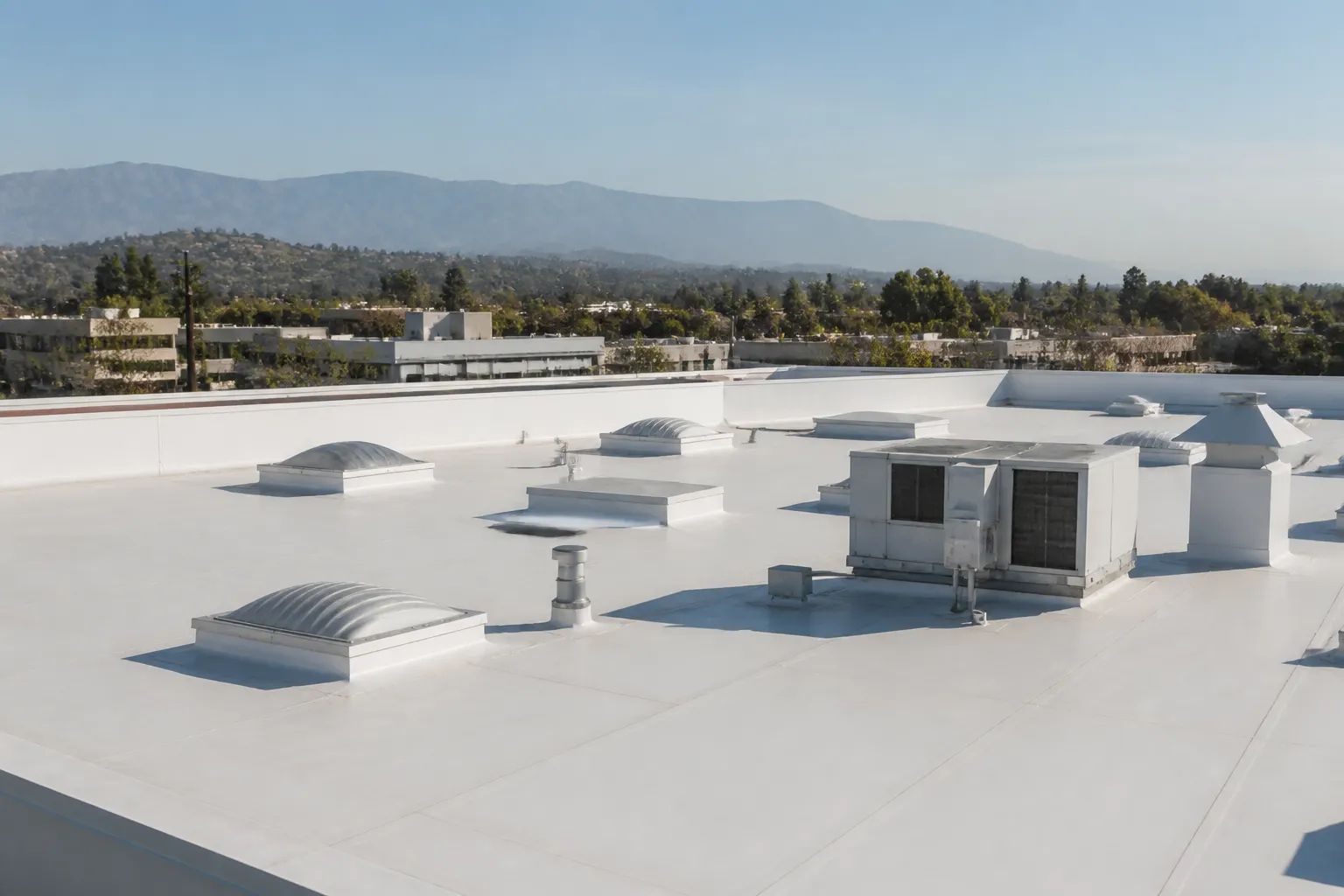
the seamless coating system System: 20+ years The seamless cool-roof coating system provides exceptional longevity by creating a fully adhered, monolithic membrane that eliminates seams and potential failure points. This advanced coating system can extend the life of existing roofs while delivering superior energy efficiency and weather protection for 20+ years when properly applied and maintained.
Factors That Impact Commercial Roof Lifespan
Several critical factors determine whether your commercial roof reaches its expected lifespan or fails prematurely. Understanding these variables helps property managers make better decisions about maintenance investments and replacement timing.
Installation Quality: The foundation of roof longevity starts with professional installation. Improperly installed flashing, inadequate adhesive application, or poor seam welding can reduce a 20-year roof to a 10-year problem. When evaluating professional commercial roofing contractors in Alhambra, CA, verify licensing, insurance, and manufacturer certifications before making your selection.
Climate and Weather Exposure: Southern California’s intense UV radiation, thermal cycling, and occasional extreme weather events all accelerate roof aging. Property managers should expect shorter lifespans for roofs with southern exposure or inadequate insulation. Cool roof systems and reflective coatings can significantly extend material life by reducing thermal stress.
Building Design and Drainage: Proper drainage is crucial for roof longevity. Ponding water, caused by inadequate slopes or blocked drains, can reduce membrane life by 50% or more. Property managers should inspect drainage systems quarterly and address any ponding issues immediately.
Maintenance Program Consistency: Regular maintenance can double a roof’s useful life. Property managers who implement systematic inspection schedules, address minor issues promptly, and maintain clean drainage systems consistently see roofs exceed expected lifespans. Deferred maintenance, conversely, can cut roof life in half.
Foot Traffic and Mechanical Equipment: HVAC units, satellite dishes, and excessive foot traffic create stress points that accelerate wear. Property managers should limit roof access, install protective walkways around equipment, and ensure proper equipment mounting to prevent membrane damage.
Coating as Cost-Effective Life Extension
A properly applied coating system can add 10-15 years to a commercial roof’s useful life at a fraction of replacement cost. When property managers face aging roofs that aren’t quite ready for full replacement, coating systems present an attractive middle path that maximizes asset value while preserving capital for other investments.
Cost Comparison: Coating vs. Full Replacement Roof coating systems typically cost 40-60% less than full roof replacement while delivering substantial life extension. For a 50,000 square foot commercial building, a complete TPO replacement might cost $300,000-$400,000, while a professional coating restoration could extend the roof’s life for $120,000-$180,000. This cost differential allows property managers to defer major capital expenditures while maintaining reliable roof performance.
Operational Impact Advantages Unlike full roof replacement, coating applications rarely require tenant relocation or business interruption. The process generates minimal noise, no tear-off debris, and can often be completed in sections to maintain normal building operations. For HOA and apartment complex roofing projects, this operational continuity is particularly valuable for maintaining resident satisfaction and rental income.
Permit Requirements: A Hidden Advantage Coating applications are typically classified as maintenance or waterproofing work, requiring no permits in most jurisdictions. TPO or other membrane replacements require building permits, structural engineering reviews, and inspection processes that add weeks to project timelines and thousands to project costs. This permitting advantage makes coating systems particularly attractive for property managers working under tight schedules or budgets.
Energy Efficiency Bonus Modern coating systems like seamless cool-roof coating system provide enhanced reflectivity that can reduce cooling costs by 15-25%. This energy efficiency improvement helps offset the coating investment through reduced operating expenses, making the lifecycle economics even more attractive for budget-conscious property managers.
Budget Planning Strategies for Property Managers
Effective commercial roof budget planning requires a long-term perspective that balances immediate cash flow with asset preservation. Smart property managers use predictive budgeting to avoid emergency expenses and maximize return on investment.
Capital Reserve Planning: Establish a dedicated roof replacement fund equal to 2-3% of the building’s value annually. For a $2 million commercial building, this means setting aside $40,000-$60,000 yearly for eventual roof replacement. This approach prevents the cash flow shock of a $200,000+ emergency roof replacement.
Lifecycle Cost Analysis: Don’t just compare initial installation costs - analyze total cost of ownership over the roof’s expected life. A premium PVC system might cost 30% more upfront than TPO but deliver lower maintenance costs and longer lifespan, resulting in better long-term value for property managers focused on total return.
Maintenance vs. Replacement Decision Matrix: Develop clear criteria for repair vs. replacement decisions. Generally, if annual maintenance costs exceed 15% of replacement cost, or if the roof has experienced three major repairs in 18 months, replacement becomes more economical than continued patching.
Sectional vs. Full Tear-Off: Cost and Operational Differences When replacement becomes necessary, consider sectional replacement strategies that minimize operational disruption and cash flow impact. Sectional replacement allows continued building use while addressing the most problematic roof areas first. This phased approach can spread costs over multiple budget cycles and maintain tenant satisfaction by avoiding extended construction periods. Full tear-off projects, while sometimes more cost-effective per square foot, create significant operational challenges for occupied buildings and require larger immediate capital commitments.
Seasonal Budget Timing: Plan major roofing work during dry months (typically April through October in Southern California) when contractor availability is better and weather delays are minimal. Property managers who schedule work during peak season often pay 10-15% premiums due to high demand.
Tax Incentive Optimization: Coordinate roof replacements with available tax incentives. Cool roof systems may qualify for utility rebates, while certain energy-efficient improvements can be depreciated advantageously. Consult with tax professionals to maximize these benefits.
Maintenance Scheduling to Maximize Roof Lifespan
A systematic maintenance program is the most cost-effective way to extend commercial roof life and protect your investment. Property managers who follow structured maintenance schedules typically see 40-60% longer roof lifespans compared to reactive maintenance approaches.
Quarterly Inspections: Conduct detailed roof inspections every three months, focusing on drainage systems, membrane condition, and penetration seals. Document findings with photos and maintain maintenance logs for warranty compliance and budget planning purposes.
Bi-Annual Professional Assessments: Schedule professional roof inspections twice yearly with qualified contractors who can identify issues beyond obvious visual problems. These assessments should include moisture scans, core samples if needed, and detailed condition reports that inform maintenance budgets.
Immediate Issue Response: Address minor problems within 30 days of identification. Small membrane tears, loose flashings, or blocked drains become expensive repairs when ignored. Property managers should maintain relationships with qualified contractors for prompt response to urgent issues.
Preventive Membrane Treatments: Consider periodic cleaning and protective coatings to extend membrane life. Our commercial roof coating restoration can restore aging roofs while providing enhanced energy efficiency and extended service life, often at 50-70% the cost of full replacement.
Drainage System Maintenance: Clean drains and gutters quarterly, especially before winter rains. Ponding water is the leading cause of premature membrane failure. Install drain guards and conduct flow testing annually to ensure proper drainage performance.
Equipment Maintenance Coordination: Coordinate HVAC maintenance with roofing inspections to prevent damage from service technicians. Establish protocols for roof access, require protective walkways, and inspect areas around mechanical equipment more frequently.
When to Replace vs. Repair: Decision Framework
Property managers face repair vs. replacement decisions regularly, and making the right choice requires objective analysis rather than emotional reactions to immediate problems. Use this framework to guide your decision-making process.
Age-Based Decision Points: If your roof is within 75% of its expected lifespan and experiencing multiple issues, replacement typically offers better long-term value than extensive repairs. For example, a 15-year-old TPO roof showing multiple seam failures should be replaced rather than repeatedly patched.
Financial Thresholds: When annual repair costs exceed 20% of replacement costs, or cumulative repairs over three years exceed 50% of replacement costs, replacement becomes the financially prudent choice. Document all repair expenses to track these thresholds objectively.
Performance Indicators: Multiple leak incidents, increasing energy costs due to deteriorated insulation, or tenant complaints about temperature control often indicate system-wide failure rather than isolated problems. These performance issues suggest replacement timing regardless of chronological age.
Future Building Plans: Consider upcoming building improvements or sale plans when making repair vs. replacement decisions. If you’re planning significant building upgrades within two years, roof replacement might align with other capital improvements for efficiency and financing advantages.
Warranty Considerations: Evaluate remaining warranty coverage before making repair decisions. Extensive repairs on recently installed roofs might void manufacturer warranties, while proper maintenance and professional repairs often extend warranty terms. Review warranty requirements carefully before proceeding with any major work.
For property managers overseeing multiple buildings, develop standardized criteria that remove emotion from these decisions and ensure consistent, profitable choices across your portfolio.
Frequently Asked Questions
Q: How do I know when my commercial roof needs replacement versus restoration?
Generally, if your roof is experiencing widespread membrane deterioration, multiple leak points, or has reached 75% of its expected lifespan with increasing maintenance costs, replacement is typically the better long-term investment. However, roofs with localized issues or those still within their prime service years often benefit significantly from coating restoration systems that can extend life by 10-15 years at a fraction of replacement cost.
Q: What’s the difference in cost between sectional and full roof replacement?
Sectional replacement typically costs 15-25% more per square foot due to mobilization and setup costs for smaller areas, but it allows continued building operation and spreads capital expenditure across multiple budget cycles. Full replacement offers better per-square-foot pricing but requires larger immediate capital investment and often necessitates temporary tenant relocation or business interruption.
Q: Do roof coatings require building permits like membrane replacements?
Most coating applications are classified as maintenance or waterproofing work and don’t require building permits, while membrane replacements typically require permits, structural reviews, and inspection processes. This permitting advantage can save weeks in project timeline and thousands in additional costs, making coatings particularly attractive for time-sensitive projects.
Q: How much should I budget annually for commercial roof maintenance?
Property managers should typically budget 1-3% of the roof replacement cost annually for maintenance, depending on roof age and condition. For example, if full replacement would cost $200,000, budget $2,000-$6,000 annually for maintenance. This proactive investment often doubles the roof’s useful life and prevents costly emergency repairs.
Q: What warranty options are available for commercial roofing work?
Most quality commercial roofing contractors offer material warranties ranging from 10-30 years and workmanship warranties from 2-10 years. Premium engineered coating systems can provide extended warranty coverage when installed by certified contractors. Always verify that your contractor maintains proper licensing and insurance to ensure warranty validity.
Q: How does Southern California’s climate affect commercial roof lifespan?
Southern California’s intense UV radiation, thermal cycling, and low humidity can reduce standard roof lifespans by 10-20% compared to more moderate climates. However, cool roof systems and reflective coatings can actually extend life beyond normal expectations by reducing thermal stress and UV damage.
Q: When should I schedule roof work to minimize costs and disruption?
Plan major roofing work during dry months (April through October in Southern California) when weather delays are minimal and contractor availability is better. However, avoid peak summer months when demand drives prices up 10-15%. Late spring and early fall often offer the best combination of favorable weather and competitive pricing.
Ready to develop a comprehensive roof management strategy for your commercial properties? HP Roofing Pro has helped Alhambra property managers protect their investments for over two decades. Our experienced team provides detailed roof assessments, lifecycle cost analysis, and customized maintenance programs that maximize your roof’s lifespan while minimizing unexpected expenses.
At HP Roofing Pro, our philosophy centers on extending useful life and avoiding unnecessary replacement. We don’t sell a roof replacement when a restoration will do. Our goal is to help property managers make the most cost-effective decisions for their specific situations, whether that means targeted repairs, coating restoration, or strategic replacement timing.
Contact HP Roofing Pro today at (626) 458-2659 to schedule your complimentary property assessment and discover how strategic roof management can improve your bottom line.