Blog
Integrated Solar and Roofing Projects: Why Timing Matters for LA Commercial Properties
June 2, 2026
Integrated Solar and Roofing Projects: Why Timing Matters for LA Commercial Properties
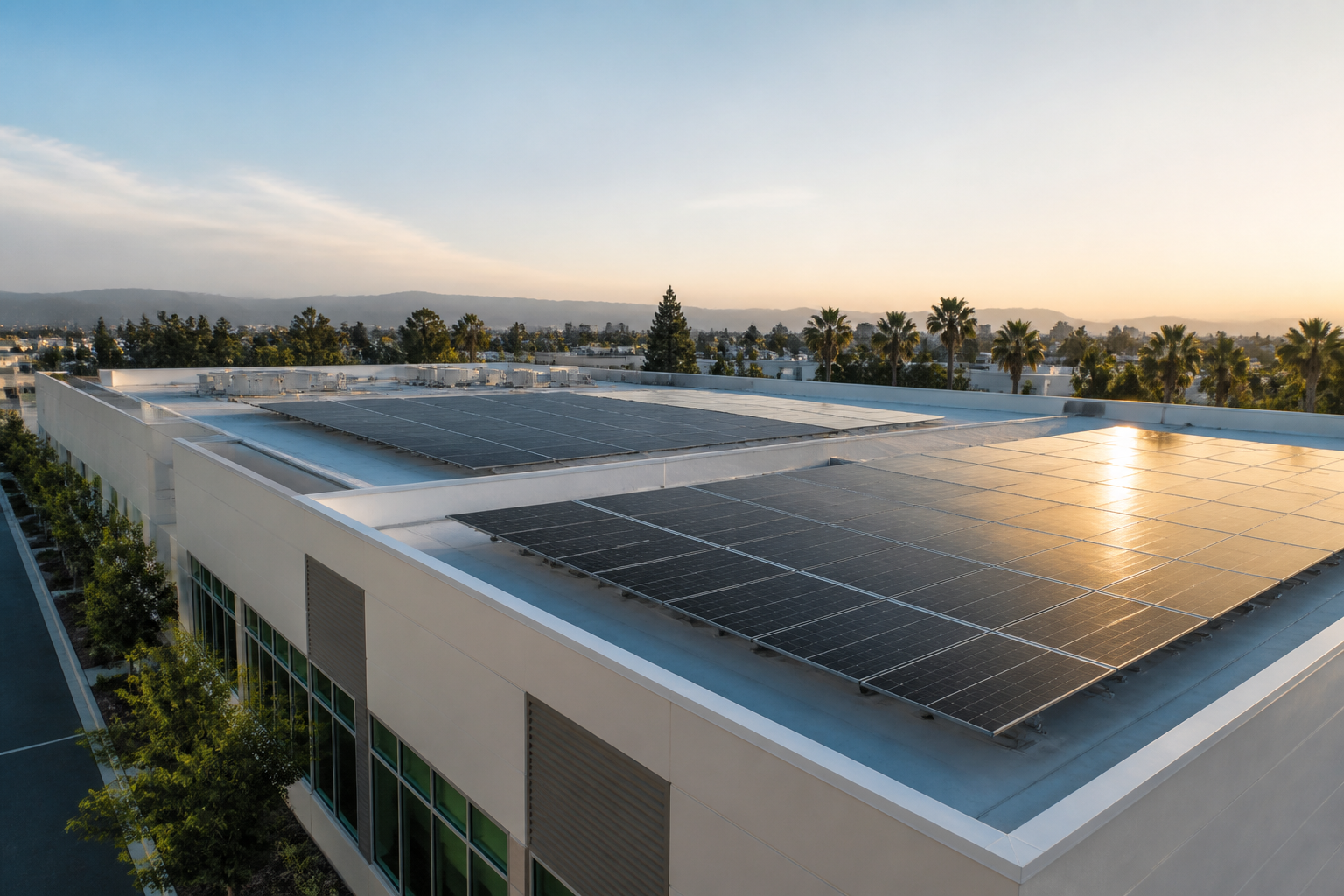
As a commercial property owner in the Los Angeles area, you’re likely considering both a roof replacement and solar installation to cut energy costs and boost property value. But here’s the question that could save you thousands: should you tackle these projects separately or together? The answer lies in understanding how solar panel commercial roofing projects benefit from strategic coordination, especially given California’s aggressive renewable energy requirements and the unique demands of Southern California’s commercial real estate market.
The traditional approach of handling roof replacement and solar installation as separate projects often leads to duplicated costs, multiple disruptions to your business operations, and missed opportunities for system optimization. However, when these projects are properly integrated, property owners typically see 15-25% cost savings compared to sequential installations, along with streamlined permitting, unified warranties, and superior long-term performance.
The Cost Advantage of Coordinated Installation
The financial benefits of combining roof replacement with solar installation extend far beyond simple bundling discounts. When contractors can plan both systems simultaneously, they eliminate redundant mobilization costs, reduce labor inefficiencies, and optimize material ordering. This coordination becomes particularly valuable in Alhambra, CA and throughout Los Angeles County, where permitting costs and inspection fees can quickly accumulate.
Consider the logistics alone: a typical commercial roof replacement requires scaffolding, crane access, and temporary weather protection. Solar installation requires similar infrastructure setup. By combining projects, you pay for mobilization once instead of twice, and contractors can design the roof structure with solar mounting points already planned, eliminating the need for later roof penetrations.
The permitting advantages are equally significant. Los Angeles County and most municipalities throughout Southern California now offer expedited review processes for combined renewable energy and building improvement projects. This can reduce permitting timelines from 8-12 weeks to 4-6 weeks, getting your property back to full operational status faster.
Labor costs also decrease substantially when the same crew handles both installations. Experienced solar panel roofing installation teams understand how roof membrane installation, flashing details, and solar mounting systems must work together. This prevents the common scenario where solar installers discover roofing issues that require costly change orders or re-work.
Property owners should also factor in avoided future costs. When solar panels are installed on an aging roof that later needs replacement, the panels must be temporarily removed and reinstalled, a process that typically costs $3,000-$8,000 for a medium-sized commercial array. Coordinating projects eliminates this future expense entirely.
Optimal Roof Conditions for Solar Installation
Not every roof is ready for solar installation, and understanding the ideal conditions helps property owners make informed timing decisions. The most critical factor is remaining roof life: solar installations typically carry 25-year warranties, so the underlying roof should have at least 20-25 years of service life remaining to avoid future removal and reinstallation costs.
Structural integrity presents another key consideration. Commercial solar installations add 3-4 pounds per square foot of additional load, plus wind uplift forces that can stress aging roof systems. A comprehensive commercial roof maintenance evaluation should confirm adequate structural capacity before solar installation proceeds.
Roof membrane condition directly affects solar performance and longevity. Newer membrane materials like TPO and PVC provide superior heat reflection compared to older systems, which helps solar panels operate more efficiently. Cool roof systems can increase solar panel output by 2-5% compared to darker roof surfaces, as panels perform better in cooler ambient conditions.
The roof layout also influences solar system design and performance. Optimal solar installations require unobstructed south-facing areas with minimal rooftop equipment interference. During roof replacement, HVAC units, exhaust fans, and other equipment can be repositioned to maximize solar potential, an impossible optimization when working around existing installations.
Drainage considerations become critical for combined projects. Solar panel mounting systems must integrate with roof drainage patterns without creating ponding areas or interfering with overflow drains. This requires careful coordination between roofing and solar design teams, which happens naturally in integrated projects but often creates problems in sequential installations.
Streamlined Permitting and Compliance Benefits
California’s complex regulatory environment makes integrated permitting one of the strongest arguments for coordinated projects. The California Energy Commission’s Title 24 requirements, combined with local building codes and utility interconnection rules, create a permitting maze that integrated projects navigate more efficiently.
For properties subject to California’s renewable energy mandates, combined projects ensure compliance planning from the project’s inception. Rather than designing a roof replacement that later constrains solar options, integrated planning optimizes both systems for regulatory compliance and performance.
The 2026 updates to Title-24 commercial roofing requirements will further emphasize cool roof systems and renewable energy integration. Properties planning roof replacement in the next few years should consider these upcoming requirements when evaluating project timing.
Environmental permitting also benefits from coordination. Projects that combine energy efficiency improvements (new cool roof systems) with renewable energy installation often qualify for expedited California Environmental Quality Act (CEQA) review, particularly for properties in environmental justice communities throughout Los Angeles County.
Utility interconnection represents another area where coordination pays dividends. Solar installations require utility grid connection studies and equipment upgrades that can take 3-6 months to complete. When combined with roof replacement, this timeline can run parallel to roof construction rather than extending project completion dates.
Many Los Angeles area utilities also offer enhanced rebates and incentives for comprehensive building improvement projects that include both efficiency improvements and renewable energy installation. These programs recognize that coordinated projects deliver superior environmental outcomes compared to piecemeal improvements.
Warranty Protection and Long-Term Performance
Integrated solar and roofing projects provide warranty protections that separate installations cannot match. When the same contractor handles both installations, property owners receive unified warranty coverage that eliminates finger-pointing between roofing and solar contractors when problems arise.
This becomes particularly valuable given the different warranty terms typical in each industry. Commercial roofing warranties typically cover 15-20 years, while solar equipment carries 25-year warranties. Coordinated installations can often extend roofing warranties to match solar terms, providing comprehensive protection for the entire system lifecycle.
The performance benefits of integration extend beyond warranty coverage. Solar panels perform best when installed on properly designed roof substrates that minimize thermal stress and provide stable mounting surfaces. RainArmor seamless cool-roof systems specifically optimize for solar installation, providing both energy-efficient roof performance and ideal conditions for photovoltaic systems.
Maintenance coordination also improves with integrated installations. Property owners can schedule combined roof and solar maintenance inspections, reducing service call costs and ensuring both systems receive proper attention. This is particularly valuable for properties in Alhambra, CA and throughout the San Gabriel Valley, where seasonal weather patterns require specific maintenance timing for optimal system performance.
Long-term performance monitoring becomes more sophisticated with integrated systems. Modern installations can monitor both roof membrane temperature and solar panel output, identifying performance issues before they become costly problems. This integrated monitoring is impossible when systems are installed separately by different contractors.
Financing Strategies for Combined Projects
The financing landscape for integrated projects offers opportunities unavailable to separate installations. California Property Assessed Clean Energy (PACE) financing specifically encourages comprehensive building improvements that include both efficiency and renewable energy components.
Commercial PACE programs in Los Angeles County can finance 100% of project costs for qualified improvements, with repayment through property tax assessments over 10-25 year terms. These programs often offer better rates for combined projects compared to separate installations, recognizing the reduced risk profile of comprehensive improvements.
Federal and state tax incentives also work more favorably for integrated projects. The Federal Investment Tax Credit (ITC) for solar installations can sometimes be applied to roofing improvements that directly support solar performance, providing additional tax benefits beyond standard depreciation schedules.
Cash flow analysis consistently favors integrated projects due to immediate energy savings from both cool roof systems and solar generation. Properties typically see 12-18 month payback periods for cool roof improvements through reduced HVAC costs, while solar installations provide immediate utility bill reductions. Combined savings accelerate total project payback compared to sequential installations.
For properties considering commercial roof replacement, timing coordination with solar installation often allows property owners to structure financing that covers both projects under favorable renewable energy lending terms rather than traditional commercial improvement loans.
The Strategic Implementation Timeline
Successful integrated projects require careful timeline coordination that maximizes efficiency while minimizing business disruption. The optimal sequence typically begins with comprehensive roof assessment 6-9 months before planned installation, allowing time for engineering studies and permitting processes.
Design coordination should start immediately after roof assessment, with solar system design informed by specific roof replacement plans. This prevents the common problem of solar designs that become obsolete when roof contractors identify structural or drainage modifications needed during replacement.
Material procurement coordination reduces costs and timeline risks. Roofing and solar materials can be ordered together, often qualifying for volume discounts and ensuring compatible delivery schedules. This coordination becomes particularly important given supply chain uncertainties that have affected both industries in recent years.
The construction sequence requires careful planning to optimize weather windows and minimize business disruption. In Southern California’s climate, projects planned for late spring through early fall typically encounter fewer weather delays, but solar installation timing must account for utility interconnection schedules that can vary by season.
Making the Right Decision for Your Property
The decision to coordinate roof replacement with solar installation ultimately depends on your property’s specific conditions, financial objectives, and timeline requirements. Properties with roofs nearing end-of-life should strongly consider integrated approaches, particularly given California’s increasingly aggressive renewable energy requirements.
For property owners in Alhambra, CA and throughout Los Angeles County, the combination of favorable solar incentives, Title 24 compliance requirements, and local permitting advantages makes integrated projects increasingly attractive. The window for optimal incentive capture continues to narrow as federal tax credits step down and state programs reach capacity limits.
Properties planning roof replacement in the next 2-3 years should begin solar feasibility studies now, even if installation timing remains flexible. This advance planning ensures optimal system design and financing structure while maintaining flexibility for market timing.
The expertise required for successful integration demands careful contractor selection. Look for contractors with demonstrated experience in both commercial roofing services and solar installation, preferably with local project portfolios that demonstrate familiarity with Los Angeles area permitting requirements and utility procedures.
Ready to explore integrated solar and roofing solutions for your commercial property? Contact HP Roofing Pro today for a comprehensive assessment that evaluates both your roof replacement needs and solar potential. Our experienced team specializes in coordinated installations throughout Los Angeles County, helping property owners maximize their investment through strategic project timing and expert execution. Call us to schedule your consultation and discover how integrated planning can save you time, money, and future complications.