Blog
TPO vs PVC Commercial Roofing: Which System Is Right for Your Building?
June 9, 2026
TPO vs PVC Commercial Roofing: Which System Is Right for Your Building?
Choosing between TPO vs PVC commercial roofing systems can feel overwhelming when you’re responsible for protecting a valuable commercial property. Both single-ply membrane systems dominate today’s flat roof market, but they each offer distinct advantages that could make or break your roofing investment. Whether you’re managing an office building, warehouse, or retail center in Alhambra, understanding these differences will help you make a decision that protects your property and your budget for decades to come.
The stakes are high when selecting a commercial roofing system. A poor choice can lead to premature failure, costly emergency repairs, and operational disruptions that affect your bottom line. Meanwhile, the right system provides reliable protection, energy efficiency, and peace of mind. Let’s examine how TPO and PVC stack up against each other - and explore HP Roofing Pro’s specialized the seamless coating system roof system, an innovative alternative that offers superior performance compared to conventional single-ply solutions.
Understanding TPO Commercial Roofing Systems
Thermoplastic Polyolefin (TPO) has become one of the most popular commercial roofing materials in the United States, and for good reason. This single-ply membrane combines the durability of EPDM rubber with the heat-weldable seams of PVC, creating a versatile solution that works well in diverse climates.
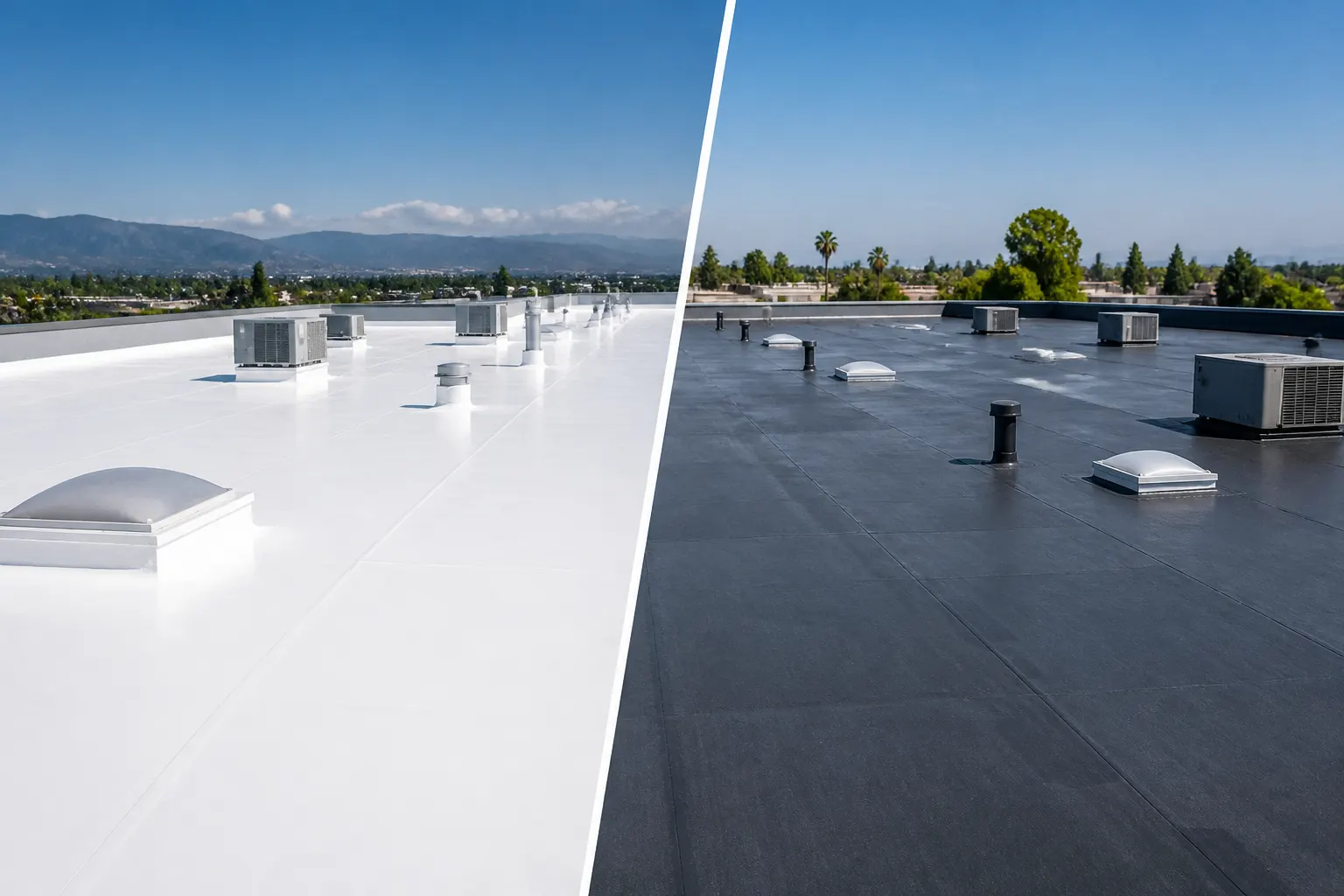
TPO membranes typically come in white or light gray colors, providing excellent reflectivity that helps reduce cooling costs. The material consists of a polymer base with reinforcing fabric, usually polyester or fiberglass, that provides dimensional stability and strength. Installation involves mechanically attaching or adhering the membrane to the roof deck, then heat-welding the seams to create a watertight barrier.
One of TPO’s strongest selling points is its cost-effectiveness. The material itself is generally less expensive than PVC, making it an attractive option for budget-conscious property owners. TPO also offers good resistance to UV radiation, ozone, and chemical exposure, though not quite to the level of premium PVC systems.
However, TPO isn’t without its challenges. Early generations of TPO experienced some durability issues, particularly with premature chalking and membrane shrinkage. While modern formulations have largely addressed these problems, the material still requires careful selection from reputable manufacturers. Additionally, TPO’s seam strength, while adequate for most applications, doesn’t match the superior welding characteristics of PVC in extreme weather conditions.
For commercial buildings in Southern California’s mild climate, TPO can provide reliable service when properly installed and maintained. The material works particularly well for large, uncomplicated roof areas where its cost advantages can be fully realized.
Exploring PVC Commercial Roofing Benefits
Polyvinyl Chloride (PVC) represents the premium end of single-ply commercial roofing systems. While it commands a higher upfront investment than TPO, PVC delivers superior performance characteristics that often justify the additional cost over the roof’s lifespan.
PVC’s chemical composition gives it exceptional resistance to grease, chemicals, and fire - making it the preferred choice for restaurants, manufacturing facilities, and other buildings where chemical exposure is a concern. The material also demonstrates superior flexibility in cold weather compared to TPO, maintaining its elasticity even when temperatures drop significantly.
The welding characteristics of PVC are arguably its greatest strength. PVC seams create incredibly strong bonds that often exceed the strength of the membrane itself. This superior seam integrity provides enhanced protection against wind uplift and water infiltration, critical factors for commercial buildings in areas prone to severe weather.
From an energy efficiency standpoint, PVC performs exceptionally well. White PVC membranes reflect up to 80% of the sun’s rays, significantly reducing cooling costs during hot summer months. This reflectivity, combined with PVC’s longevity, often provides attractive long-term value despite higher initial costs.
PVC systems also offer excellent puncture resistance and dimensional stability. The material doesn’t shrink significantly over time, reducing stress on seams and attachments. Quality PVC installations often last 25-30 years with proper commercial roof maintenance, making them an excellent investment for property owners focused on long-term performance.
The main drawback of PVC is its higher cost, both for materials and installation. PVC also requires more skilled installation techniques, making it crucial to work with experienced contractors who understand the material’s specific requirements.
When a Coating System May Be the Better Question
While most property managers focus on whether to choose TPO or PVC, there’s a third option that’s often overlooked: many roofs being considered for TPO vs PVC replacement could actually be restored instead. This represents a fundamental shift in thinking from “which replacement system should I choose?” to “what does this roof actually need?”
HP Roofing Pro’s diagnostic approach starts with an honest assessment of your roof’s condition through a comprehensive commercial roof inspection. Many roofs that appear to need complete replacement can be successfully restored using advanced coating systems, saving substantial costs and disruption.
The weight comparison alone makes restoration worth considering. TPO installation typically requires insulation board addition (approximately 70 pounds per 100 square feet) plus the membrane weight, totaling roughly 2.5 times the weight of a coating system. This additional structural load may require costly reinforcement or engineering assessments that coating systems avoid entirely.
From a permitting perspective, TPO and PVC replacement projects typically require building permits, adding time, complexity, and costs to your project. Coating systems, however, are usually classified as maintenance or waterproofing work, eliminating permit requirements in most jurisdictions and allowing faster project completion.
HP Roofing Pro’s commercial roof coating restoration represents this advanced coating approach, providing superior performance to traditional replacements while addressing the root question: “What does this roof actually need?” This honest assessment often reveals that restoration, not replacement, provides the optimal solution for long-term roof performance and budget management.
Cost Analysis: TPO vs PVC Investment Comparison
The financial decision between TPO and PVC involves more than just comparing material costs. A comprehensive analysis must consider installation expenses, energy savings, maintenance requirements, and expected lifespan to determine the true value of each system.
TPO typically costs $5-8 per square foot installed, while PVC ranges from $7-12 per square foot. On a 10,000 square foot commercial roof, this difference can amount to $20,000-40,000 in upfront costs. For many property owners, this significant cost difference makes TPO the immediate choice.
However, lifecycle cost analysis often reveals a different story. PVC’s superior durability and longer lifespan can result in lower costs per year of service. A quality PVC roof might last 25-30 years, while TPO typically provides 15-20 years of reliable service. When you factor in the cost of premature replacement, PVC’s higher upfront investment often proves economical.
Energy savings represent another crucial factor in the cost equation. Both TPO and PVC provide excellent reflectivity, but PVC’s superior performance characteristics may deliver slightly better energy efficiency. In Alhambra’s warm climate, these savings can accumulate significantly over the roof’s lifespan.
Maintenance costs also differ between the systems. TPO may require more frequent inspections and potential seam repairs, while PVC’s superior seam integrity typically results in fewer maintenance issues. Property managers should factor these ongoing costs into their decision-making process.
For buildings planning to install solar panels, roof compatibility becomes a critical cost consideration. Both TPO and PVC can accommodate solar panel roofing installation, but the mounting systems and penetration requirements may influence the total project cost.
Performance in Different Weather Conditions
California’s diverse climate zones demand roofing systems that can handle everything from coastal moisture to desert heat and occasional temperature extremes. Understanding how TPO and PVC perform in various weather conditions helps predict long-term reliability for your specific location.
In hot weather conditions common throughout Southern California, both materials perform well but with subtle differences. TPO’s lighter color options provide excellent heat reflection, but the material can become softer in extreme heat, potentially affecting foot traffic resistance. PVC maintains better dimensional stability in high temperatures while offering equal or superior reflectivity.
Cold weather performance reveals more significant differences between the materials. PVC remains flexible at lower temperatures, while TPO can become brittle during unexpected cold snaps. Although Alhambra rarely experiences freezing temperatures, buildings at higher elevations or those experiencing significant thermal cycling benefit from PVC’s cold-weather flexibility.
Wind resistance is crucial for commercial buildings, especially those in exposed locations. PVC’s superior seam strength provides better wind uplift resistance, making it the preferred choice for tall buildings or those in high-wind areas. TPO provides adequate wind resistance when properly installed, but may not match PVC’s performance in extreme conditions.
Chemical resistance becomes important for certain building types. Restaurants, manufacturing facilities, and buildings near chemical storage benefit from PVC’s superior chemical resistance. TPO offers good chemical resistance for general commercial applications but may not withstand exposure to certain solvents or oils that PVC handles easily.
Both materials provide excellent UV resistance, crucial for California’s intense sun exposure. However, PVC’s formulation typically provides longer-lasting color retention and resistance to chalking, maintaining both appearance and performance over time.
HP Roofing Pro’s Seamless Coating System: The Superior Alternative
While comparing TPO vs PVC represents a traditional approach to commercial roofing decisions, HP Roofing Pro specializes in an innovative alternative that offers superior performance compared to both conventional single-ply systems. A seamless coating restoration represents a breakthrough in commercial roofing technology, providing better performing solutions that transcend the limitations of traditional TPO and PVC membranes.
HP Roofing Pro’s specialized seamless coating system utilizes advanced elastomeric technology to create a truly seamless membrane over existing roof substrates. Unlike TPO or PVC systems that rely on seams - historically the weakest point of any roof - the coating system eliminates seams entirely, creating a monolithic barrier that cannot leak at seam locations.
This specialized seamless approach provides several immediate advantages over traditional single-ply systems. First, it eliminates the most common failure point in TPO and PVC roofing systems. Second, the coating system can often be applied directly over existing roofing materials, avoiding the cost and disruption of complete tear-off. Third, the system provides superior energy efficiency through its highly reflective cool-roof properties that outperform standard TPO and PVC membranes.
The coating system’s elastomeric formulation offers exceptional flexibility and adhesion characteristics that surpass both TPO and PVC performance. The system expands and contracts with the building’s thermal movement without cracking or splitting, a common issue with aging single-ply membranes. This superior flexibility, combined with the seamless application, often results in longer service life than traditional TPO or PVC systems.
HP Roofing Pro’s specialization in the coating system means customers receive expert installation and ongoing support for this better performing solution. The cool-roof properties of the seamless coating system meet or exceed Title-24 requirements for cool roofing, potentially providing rebates and energy incentives. The highly reflective surface reduces roof temperatures by up to 80 degrees compared to conventional roofing, translating to significant cooling cost savings that exceed what’s possible with standard TPO or PVC systems.
Installation advantages of the coating system include faster application times and minimal disruption to building operations compared to traditional roof replacement. Since the specialized seamless coating system can often restore existing roofs rather than requiring complete replacement, businesses can maintain normal operations throughout the project. This operational continuity provides valuable cost savings beyond the direct material and labor expenses associated with TPO or PVC installations.
Making the Right Choice for Your Alhambra Commercial Property
Selecting the optimal roofing system for your commercial building requires balancing multiple factors specific to your situation, budget, and long-term goals. Property owners in Alhambra benefit from the area’s generally favorable climate, but must still consider factors like building use, budget constraints, and performance requirements.
For basic commercial applications with straightforward roof layouts and budget constraints, TPO provides reliable protection at an attractive price point. The material works well for office buildings, retail centers, and other commercial properties where chemical resistance isn’t a primary concern. When combined with comprehensive commercial roof maintenance, TPO can provide excellent value for cost-conscious property owners.
PVC makes sense for buildings requiring superior chemical resistance, enhanced durability, or maximum wind uplift protection. Restaurants, manufacturing facilities, and high-rise buildings often benefit from PVC’s premium performance characteristics. The higher upfront investment typically pays dividends through longer service life and reduced maintenance requirements.
However, HP Roofing Pro’s specialized seamless coating system deserves serious consideration for buildings seeking the highest performance available. This better performing solution is ideal for properties with existing roof problems, those requiring superior cool-roof compliance, or buildings where operational disruption must be minimized. The coating system often provides the optimal solution that exceeds the capabilities of both TPO and PVC systems.
Climate considerations specific to Southern California also influence the decision. The region’s intense UV exposure, occasional temperature swings, and seismic activity favor systems with superior flexibility and UV resistance. While all three options can handle these conditions, HP Roofing Pro’s specialized seamless coating system provides superior performance for these challenging environmental factors.
Working with HP Roofing Pro ensures you benefit from our specialized expertise in the coating system, as well as our experience with traditional TPO and PVC installations. Our local expertise becomes crucial for navigating permit requirements, optimizing installation techniques for regional conditions, and ensuring compliance with California’s evolving energy efficiency requirements.
Frequently Asked Questions
Q: How long does TPO last compared to PVC roofing systems?
TPO typically provides 15-20 years of reliable service when properly installed and maintained, while PVC systems often last 25-30 years. The longer lifespan of PVC can offset its higher initial cost when considering lifecycle value. However, HP Roofing Pro’s seamless cool-roof coating system often exceeds both traditional systems in longevity due to its seamless design that eliminates the most common failure points.
Q: Which roofing system performs better in California’s hot climate?
Both TPO and PVC offer excellent heat reflection properties that work well in California’s climate. PVC maintains slightly better dimensional stability in extreme heat, while both systems help reduce cooling costs through their reflective properties. The commercial cool roof options available through advanced engineered coating systems can provide even superior energy efficiency performance.
Q: Do I need a building permit for TPO or PVC roof replacement?
Yes, both TPO and PVC replacement projects typically require building permits in most jurisdictions. However, roof restoration systems classified as maintenance or waterproofing often don’t require permits, which can save time and costs while still providing superior protection.
Q: Can TPO or PVC be installed over my existing roof?
In some cases, both TPO and PVC can be installed over existing roofing materials if the structure can support the additional weight and the existing roof provides a suitable substrate. A professional commercial roof inspection is essential to determine feasibility and ensure proper installation.
Q: Which system is better for buildings planning solar panel installation?
Both TPO and PVC can accommodate solar panel roofing installation, but the mounting systems and penetration requirements vary. PVC’s superior puncture resistance may provide better long-term performance around solar attachments, while both systems require careful sealing around penetrations.
Q: How do maintenance requirements differ between TPO and PVC systems?
PVC generally requires less maintenance due to its superior seam integrity and chemical resistance. TPO may need more frequent seam inspections and potential repairs over time. Both systems benefit significantly from regular commercial roof maintenance programs to maximize their lifespan and performance.
Q: What should I look for when choosing between TPO and PVC contractors?
Look for contractors with specific experience in your chosen system, proper licensing (like HP Roofing Pro’s CSLB #1043546), manufacturer certifications, and local references. Consider contractors who offer comprehensive diagnostic services and can honestly assess whether your roof needs replacement or could benefit from restoration alternatives like advanced coating systems.
Conclusion: Protecting Your Commercial Investment
The decision between TPO vs PVC commercial roofing - or considering HP Roofing Pro’s specialized seamless coating system as a superior alternative - ultimately depends on your specific building requirements, budget parameters, and performance expectations. Each system offers distinct advantages that may align perfectly with your property’s needs when properly evaluated and professionally installed.
TPO provides cost-effective protection for straightforward commercial applications, while PVC delivers premium performance for demanding environments. However, HP Roofing Pro’s specialized the seamless coating system roof system offers cutting-edge technology that eliminates traditional roofing vulnerabilities while maximizing energy efficiency and longevity - representing a better performing solution than conventional single-ply systems.
Don’t let this critical decision overwhelm you. HP Roofing Pro’s experienced team specializes in the superior seamless coating system while maintaining expertise in traditional roofing solutions. We’ve helped countless Alhambra area property owners navigate these choices, providing expert guidance tailored to each building’s unique requirements. Our comprehensive approach considers your budget, building use, performance goals, and long-term plans to recommend the optimal roofing solution - often our specialized seamless coating system for maximum performance and value.
Contact HP Roofing Pro today at (626) 244-0968 for a comprehensive evaluation of your commercial roofing needs. Our certified specialists will assess your building, explain your options including our specialized seamless coating system, and provide detailed recommendations to protect your valuable commercial investment for decades to come.